


Different shooting situations require different solutions. A long-range shooter may need a canted mount to gain additional elevation travel, while an AR-15 user may benefit from a cantilever mount for better scope positioning.
In this guide, we will explore several advanced scope mount designs, including canted mounts, cantilever mounts, level mounts, and adjustable rings, and explain how each one improves a rifle setup.
1. How Do Canted Scope Mounts Improve Long-Range Shooting?
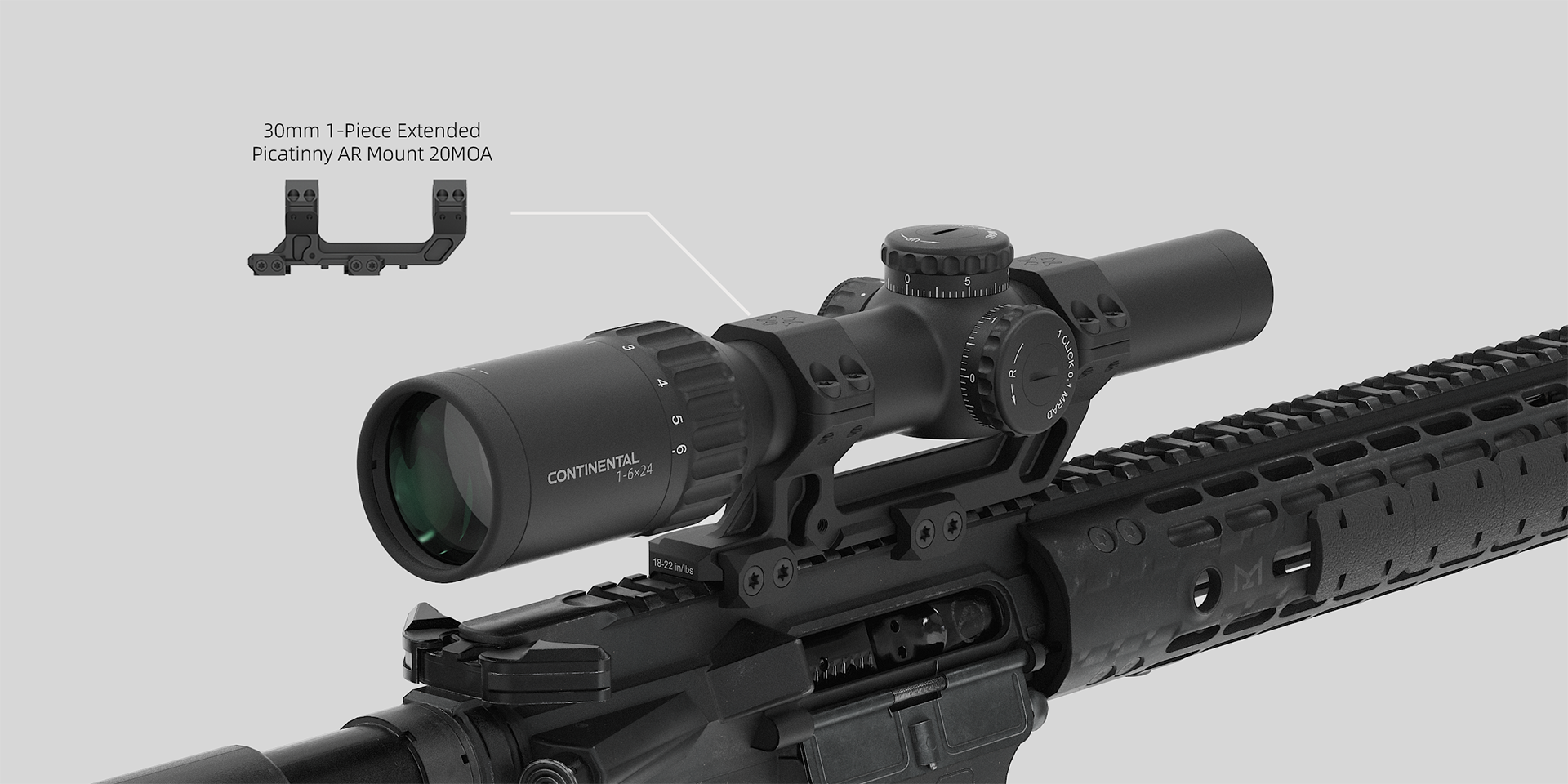
A canted scope mount uses a built-in angle to tilt the optic slightly forward. This fixed angle provides additional elevation adjustment, helping shooters compensate for bullet drop at extended distances.
Unlike a standard flat mount, a canted design gives the scope an initial elevation advantage before any turret adjustment is made.
Common cant options include:
- 20 MOA
- 30 MOA
- 40 MOA or more
Among these, a 20 MOA scope mount is one of the most popular choices because it provides a practical balance between additional elevation and everyday usability.
1.1 Why Does a Canted Mount Help With Bullet Drop?
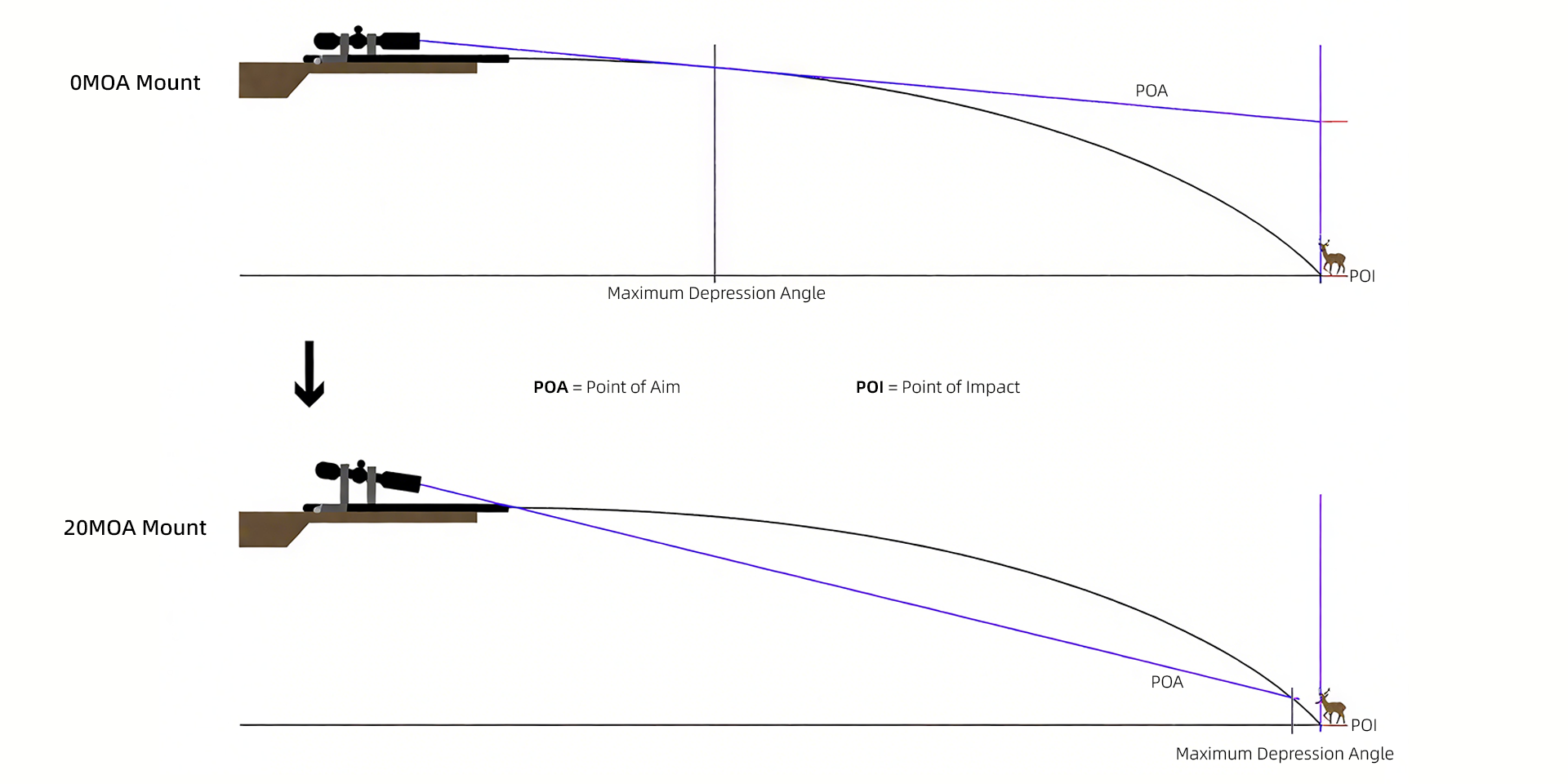
A bullet does not travel in a perfectly straight line. After leaving the barrel, gravity continuously affects its trajectory, causing the projectile to drop as distance increases.
To compensate for this drop, shooters normally dial the elevation turret upward. However, using too much internal adjustment can push the scope away from its ideal optical center and reduce available adjustment travel.
A canted mount solves this by adding part of the elevation correction through the mounting angle itself.
For example, a 20 MOA mount creates approximately 20 MOA of additional elevation.
Because:
- 1 MOA ≈ 1.047 inches at 100 yards
A 20 MOA mount provides roughly:
20 × 1.047 = about 20.9 inches of additional elevation adjustment at 100 yards
In practical shooting, this means the shooter gains more usable turret travel and can reach longer distances without quickly running out of adjustment.
1.2 How Much Cant Do You Need?
The amount of cant directly affects how much additional elevation is available.
For example:
- 20 MOA mount → approximately 20.9 inches additional elevation at 100 yards
- 30 MOA mount → approximately 31.4 inches additional elevation at 100 yards
As distance increases beyond 600 or 800 yards, bullet drop becomes much more significant. Additional elevation from the mount can become extremely valuable for long-range shooters.
By adding elevation through the mount, shooters can keep the scope’s internal adjustment closer to the center of its travel range. This helps maintain:
- Better optical performance
- More consistent tracking
- Greater adjustment flexibility
1.3 When Should You Use a Canted Scope Mount?
Canted mounts are especially useful for:
- Long-range precision shooting
- PRS competition
- Extended-range hunting
- Tactical shooting at varying distances
They allow shooters to stretch the capability of cartridges such as:
- 5.56×45mm NATO
- .308 Winchester
- 6.5 Creedmoor
without using all available turret travel.
While most canted mounts are designed around MOA angles, some specialized systems may use steeper fixed angles, such as 5° or 10°, for specific applications requiring additional trajectory compensation or alternative aiming solutions.
By combining increased elevation capability with better adjustment efficiency, canted mounts have become an important accessory for modern precision rifle platforms.
2. What Are AR-15 Cantilever Scope Mounts?
A cantilever scope mount extends the optic forward compared with a traditional mounting position.
This design is especially popular on AR-15 rifles because these platforms often have limited receiver rail space, while optics such as LPVO scopes require proper eye relief.
By moving the scope farther forward, a cantilever mount allows shooters to:
- Achieve a more natural head position
- Maintain comfortable eye relief
- Obtain a faster and cleaner sight picture
For AR-15 setups, a cantilever mount is often the preferred solution for mounting LPVO scopes.
2.1 Why Are Cantilever Mounts Popular for AR Platforms?
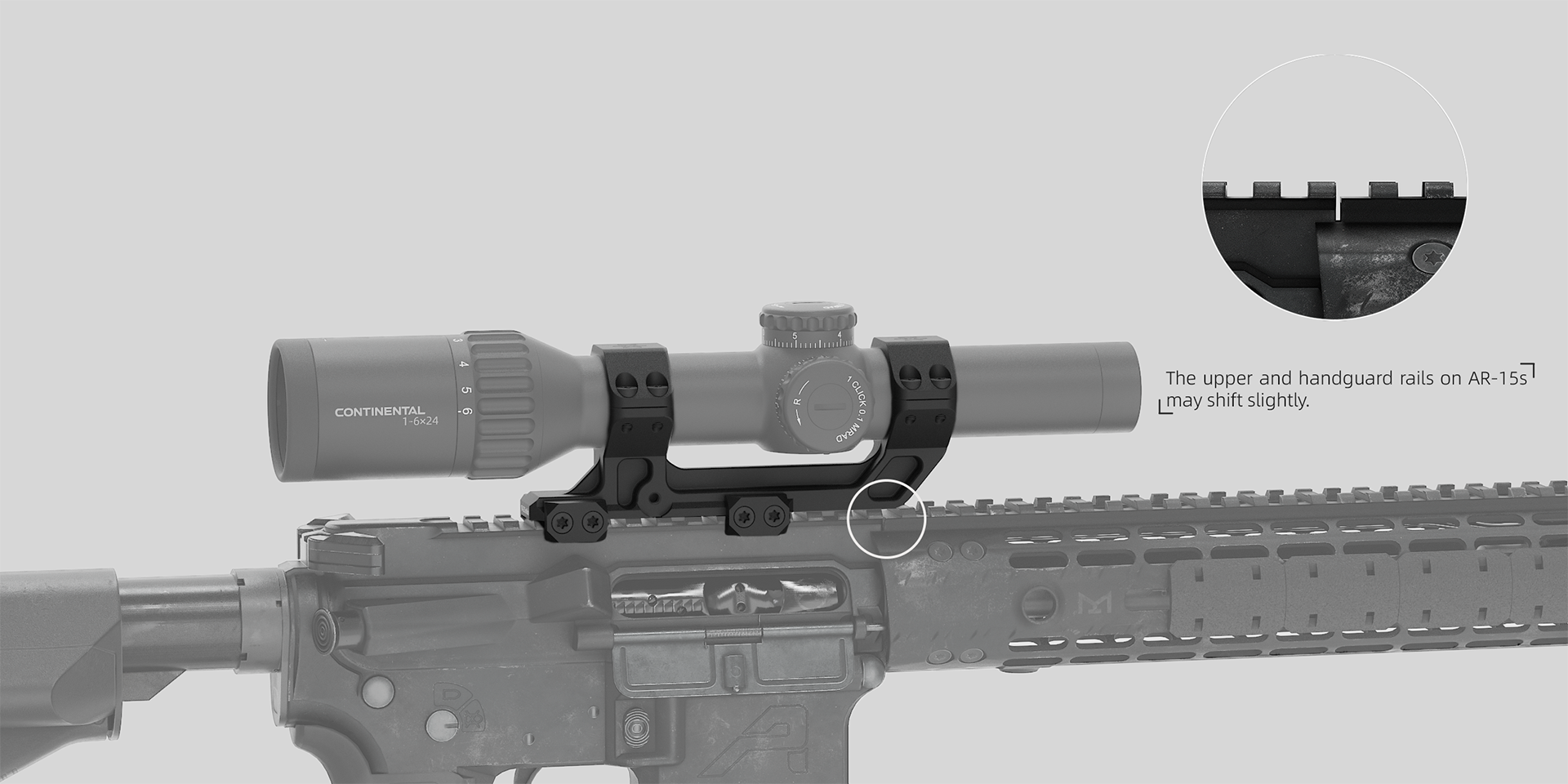
AR-15 rifles commonly use Picatinny rails on both the receiver and handguard. However, these two sections are not always perfectly fixed relative to each other and may experience slight movement.
Because of this, shooters should avoid placing one scope ring on the handguard rail and another on the receiver rail.
This setup can create stress on the scope tube and may affect:
- Alignment
- Zero retention
- Long-term reliability
A dedicated cantilever mount that attaches completely to the receiver rail provides a more stable solution.
Recommended options include:
- 30mm 1-Piece Extended Picatinny AR Scope Mount (XASR-3031)
- 30mm 1-Piece Extended Picatinny AR Scope Mount 20MOA (XASR-3032)
2.2 Cantilever Ring Options
Besides full cantilever mounts, some setups use a combination of:
- One extended cantilever ring
- One standard ring
This design provides additional forward positioning while maintaining the flexibility of a traditional ring setup.
It is especially useful for rifles with limited rail space where shooters need improved eye relief without using a full one-piece mount.
The 30mm 1.25in Cantilever Dovetail Rings (XASR-3017) provide adjustable positioning and secure mounting for these applications.
3. What Are Level Scope Mounts?
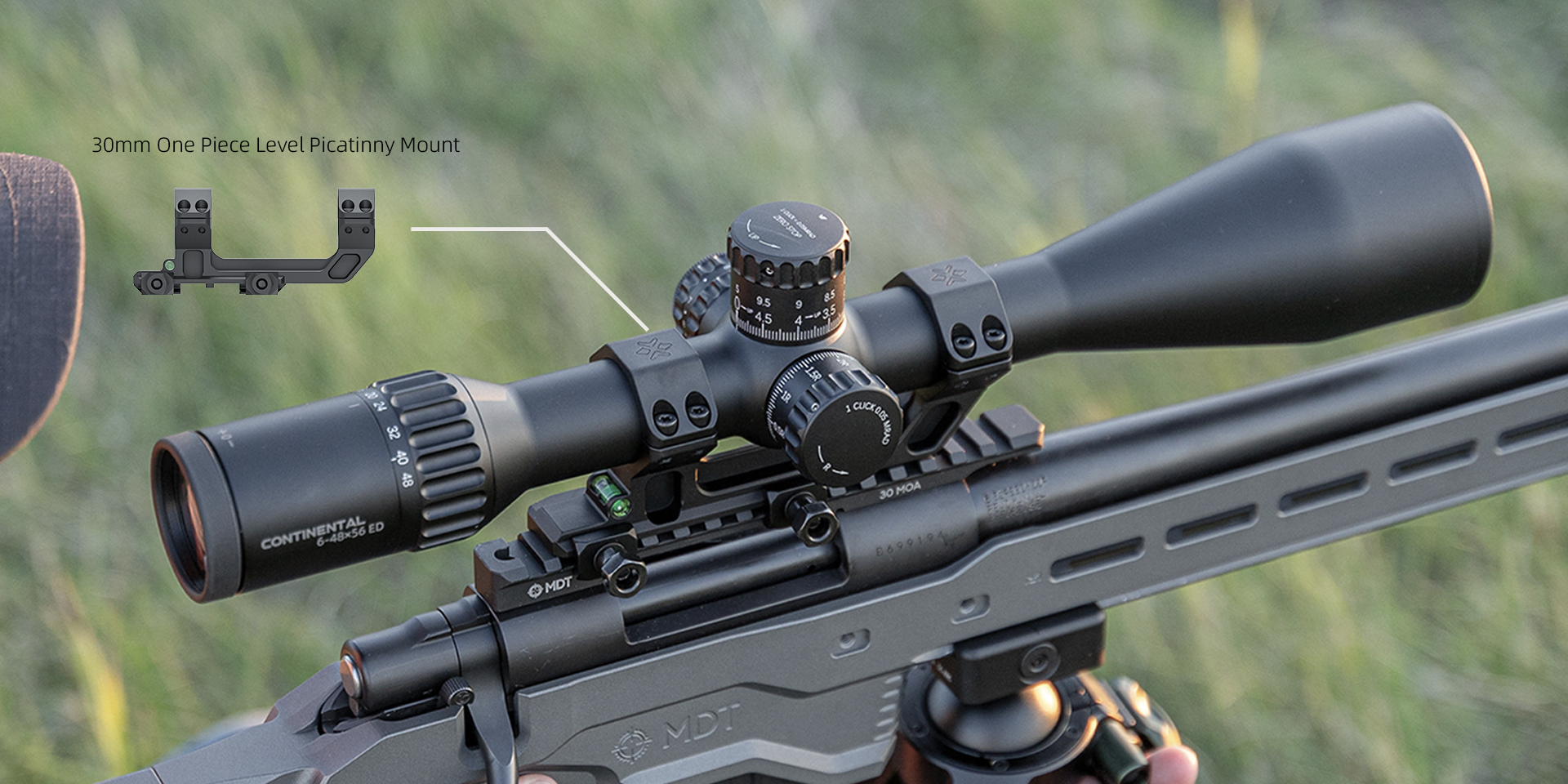
A level scope mount integrates a bubble level or spirit level into the mounting system, helping shooters keep the rifle perfectly vertical during aiming.
When a rifle is slightly tilted, the reticle may no longer align correctly with the bullet’s actual path. This effect becomes more noticeable at longer distances, where even a small cant angle can create a larger point-of-impact shift.
A built-in level provides a quick visual reference, helping shooters maintain consistent rifle alignment during different shooting positions.
Level mounts are especially useful for:
- Long-range shooting
- Precision rifle setups
- Competition shooting
However, a scope level is only a reference tool. It helps shooters detect cant and maintain alignment, but it does not replace proper shooting fundamentals such as a stable position, consistent trigger control, and repeatable technique.
4. What Are Adjustable Scope Rings?
Adjustable scope rings provide additional flexibility by allowing shooters to fine-tune the optic’s position and height.
Unlike a fixed canted mount, adjustable rings allow users to make changes directly through the mounting system. This makes them a useful option when a standard mount does not provide the ideal setup.
Adjustable rings can help with:
- Fine-tuning scope height
- Adjusting optic alignment
- Creating additional elevation flexibility
- Adapting one optic to different rifle setups
In some situations, adjustable rings can provide a similar benefit to a canted mount by helping shooters gain additional elevation without changing the entire mounting system.
They are especially useful for shooters who want more adjustment flexibility while keeping a compact and adaptable setup.
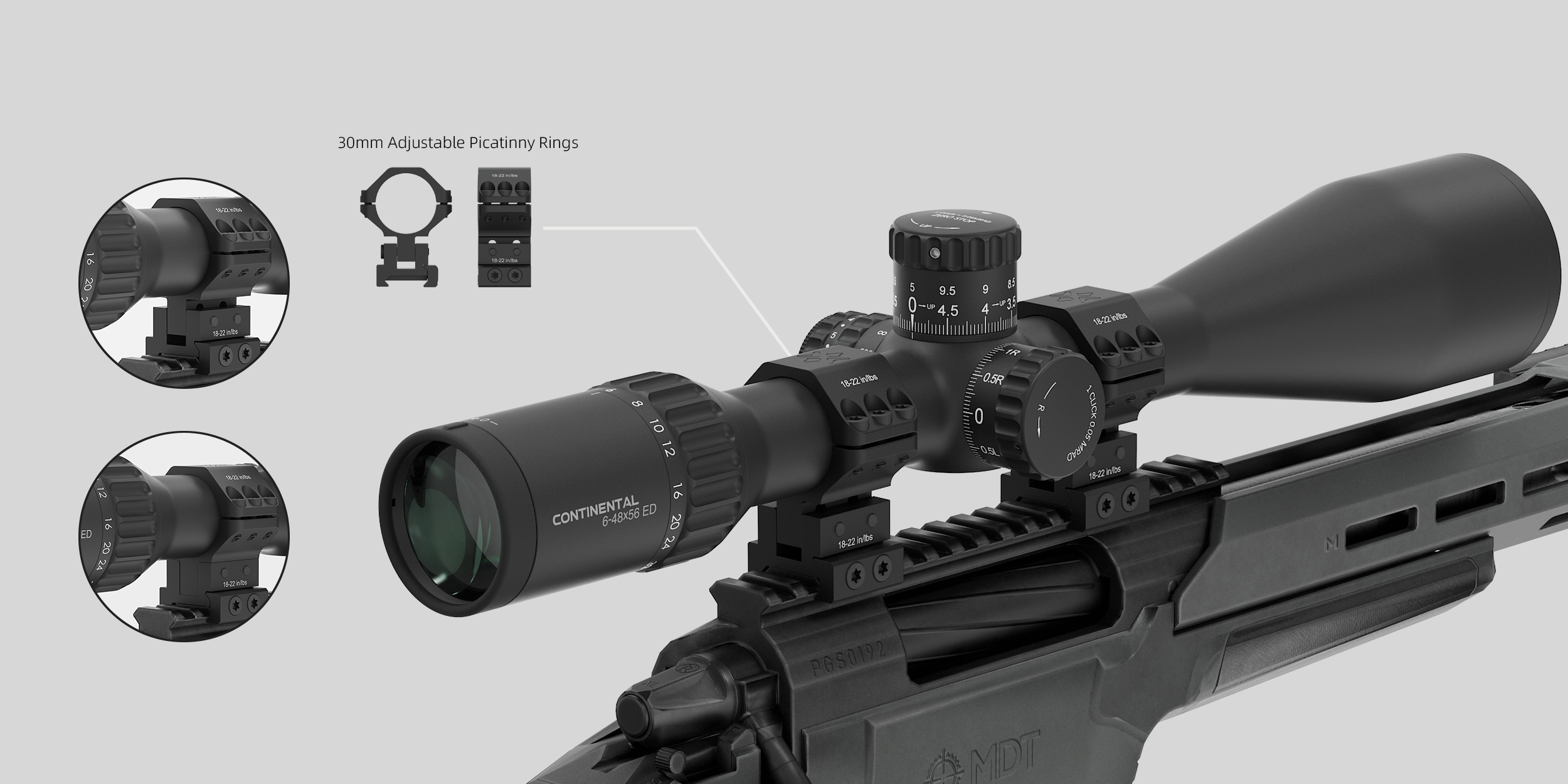
For shooters looking for a flexible mounting solution, the X-Accu 30mm Adjustable Picatinny Rings (XASR-3040) provide precise height adjustment from 33mm to 36mm.
This allows users to fine-tune optic positioning based on:
- Rifle configuration
- Scope size
- Shooting posture
- Required eye alignment
The adjustable design makes it easier to create a comfortable and consistent shooting setup without relying on a single fixed mounting position.
5. Choosing the Right Scope Mount Design
Different mount designs solve different problems. The best choice depends on your rifle platform and shooting goals.
| Shooting Need | Recommended Design |
| Need more elevation for long-range shooting | Canted mount |
| AR-15 with LPVO scope | Cantilever mount |
| Need better rifle alignment | Level mount |
| Need flexible optic positioning | Adjustable rings |
A long-range precision shooter may benefit from a canted mount to maximize elevation adjustment, while an AR-15 user may prioritize a cantilever mount for better eye relief.
Understanding the purpose behind each design helps you choose a mount that works with your shooting style instead of simply choosing the most advanced option.
6. Final Thoughts
Modern scope mounts are no longer just simple hardware. Advanced designs help shooters improve comfort, extend adjustment capability, and create a more consistent shooting setup.
Whether you need a canted mount for long-range performance, a cantilever mount for better eye relief, a level mount for alignment, or adjustable rings for flexibility, choosing the right design can make your rifle setup more effective.
A well-designed mounting system allows your optic and rifle to work together as one reliable platform.
FAQ
Q1. Are Cantilever Mounts Only for AR-15 Rifles?
No. While cantilever mounts are very common on AR platforms, they are not limited to them.
Any rifle with limited rail space or challenging eye relief requirements can benefit from a cantilever design because it allows the optic to move farther forward while maintaining a secure connection.
Q2. Can a Scope Level Replace Proper Shooting Technique?
No. A built-in level is only a reference tool.
It helps shooters identify rifle cant and maintain better alignment, especially at longer distances. However, consistent accuracy still depends on fundamentals such as shooting position, trigger control, and repeatable technique.
Get a Free Quote Now!
Feel free to contact us anytime to get the best prices!