


SPR and DMR rifles both deliver precision beyond a standard rifle—but they are built with different priorities.
An SPR (Special Purpose Rifle) focuses on mobility and versatile precision, while a DMR (Designated Marksman Rifle) emphasizes stability and longer-range performance. The right choice depends on how and where you plan to shoot.
1. SPR: Precision Meets Mobility
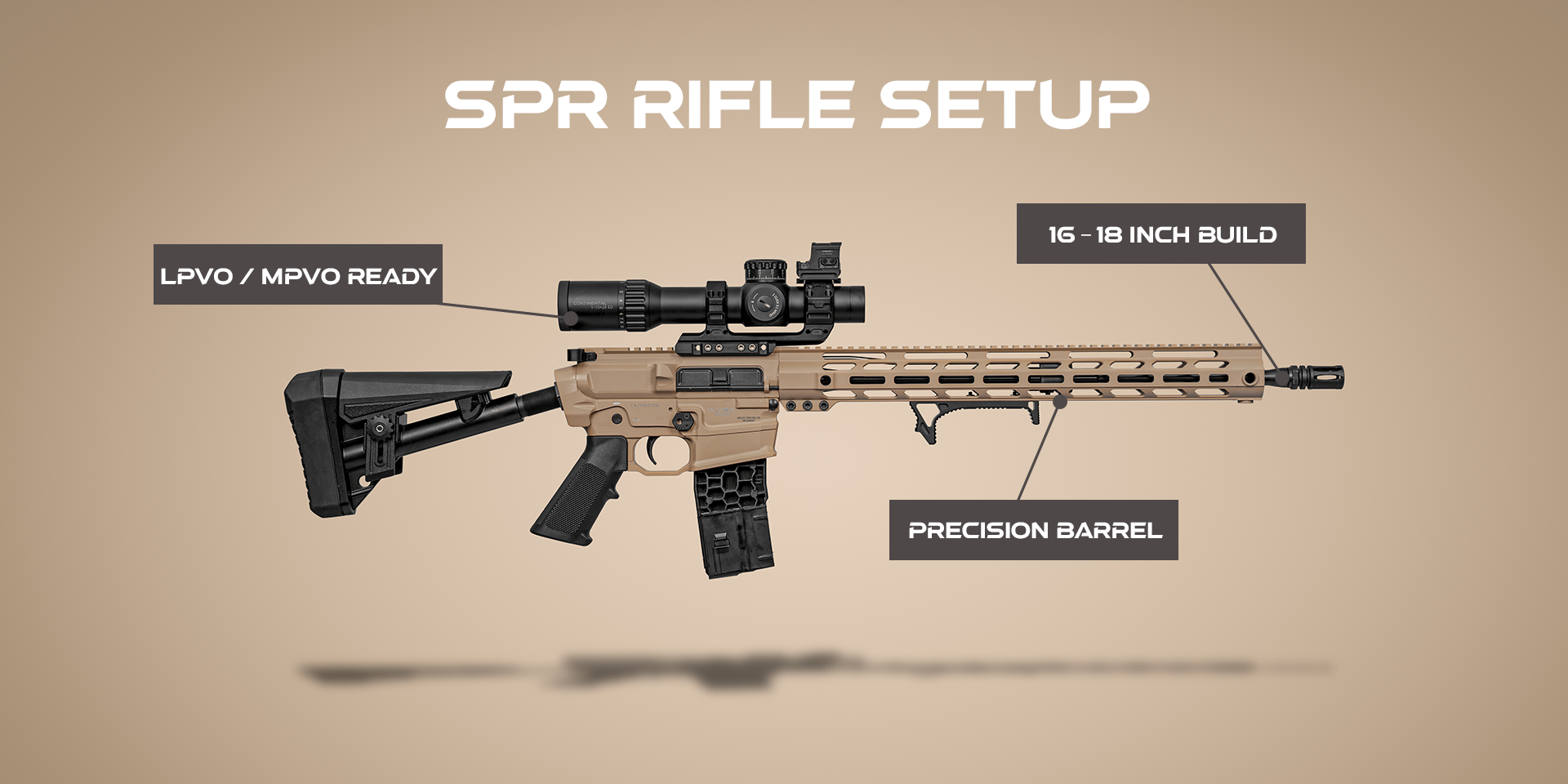
An SPR is typically a semi-automatic rifle built for accurate fire at intermediate to medium-long distances, often around 600 meters (656 yards).
Typical features include:
- 16–18 inch barrel
- Match-grade or free-floated barrel
- 1:7 or 1:8 twist
- Adjustable stock
- LPVO or lightweight MPVO
- Offset or piggyback red dot
The goal is a rifle that stays accurate without becoming difficult to carry or maneuver.
SPR = precision + mobility + versatility.
2. DMR: More Stability, More Reach
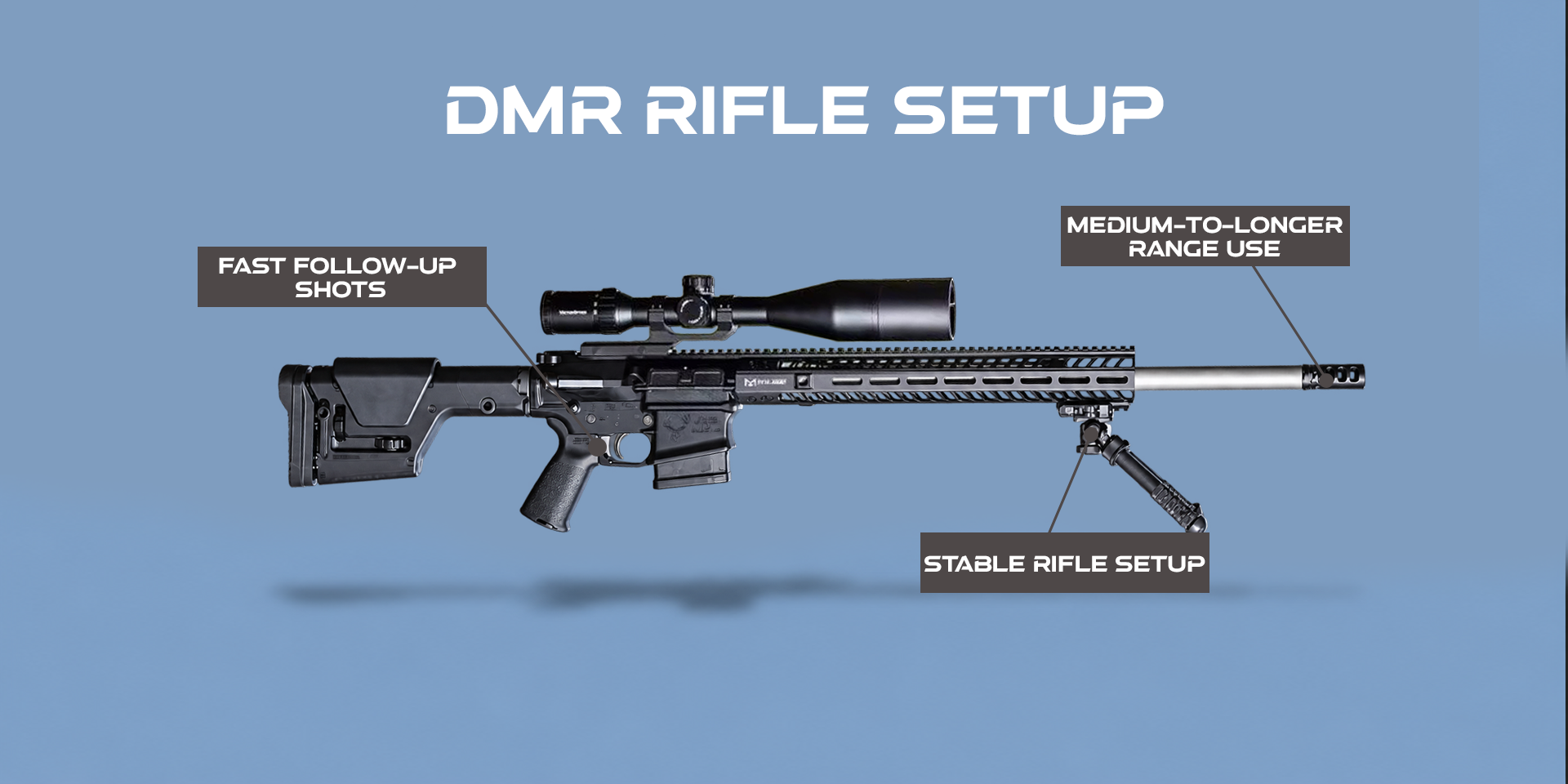
A DMR is designed to extend accurate fire beyond the normal range of a standard rifle while remaining suitable for semi-automatic follow-up shots.
DMR setups typically prioritize:
- Extended-range accuracy
- Stable shooting positions
- Consistent follow-up shots
- Target observation
- Higher magnification
Common chamberings include 7.62 NATO, .308 Win, 6.5 Creedmoor, and 6.5×47 Lapua.
A typical DMR setup may reach around 800–1000 meters (875–1093 yards), depending on the rifle, cartridge, and conditions.
DMR = stability + reach + precision.
3. SPR vs. DMR: Quick Comparison
| Feature | SPR | DMR |
| Role | Mobile precision | Extended-range precision |
| Typical Range | ~600 m / 656 yds | ~800–1000 m / 875–1093 yds |
| Build | Lighter, more versatile | Stability-focused |
| Optic | LPVO / lightweight MPVO | Medium-to-higher magnification |
| Common Calibers | 5.56 NATO, .223 Wylde, 6mm ARC, 6.5 Grendel | 7.62 NATO, .308 Win, 6.5 Creedmoor |
| Strength | Mobility | Range and stability |
These aren’t hard boundaries. Barrel, caliber, optic, and overall configuration can shift a rifle toward either role.
4. Choosing an SPR Scope
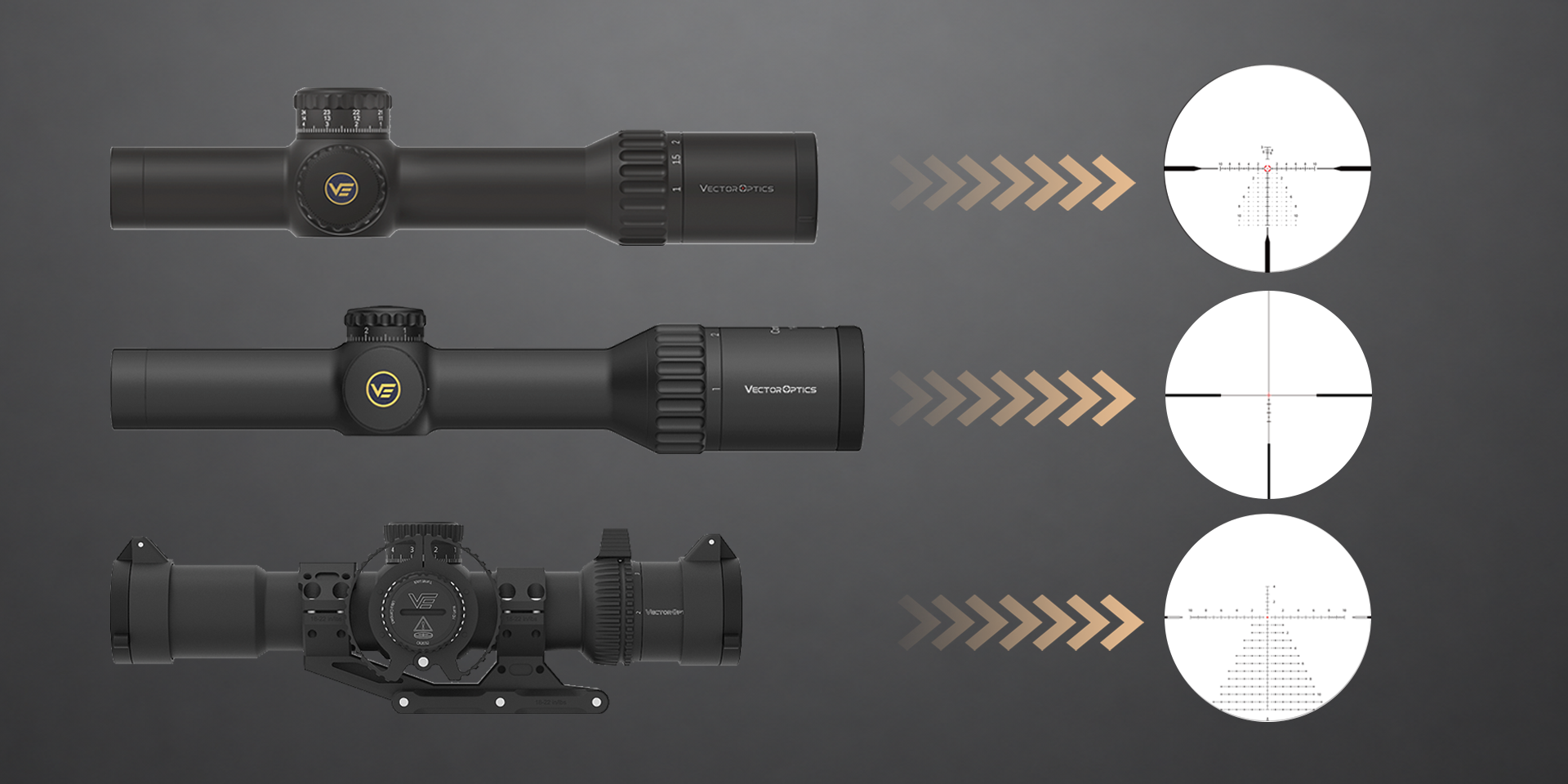
For an SPR, look for an optic that balances speed and precision:
- Low-to-medium magnification
- Wide FOV
- Clean reticle
- Long eye relief
- Locking turrets
- Lightweight design
Recommended Options
Continental x10 1-10×28 ED RAR-C — SCFF-62
True 1× viewing with up to 10× magnification, plus a wide adjustment range and zero stop.
Continental 1-8x24i Fiber LPVO — SCOC-45
A lightweight LPVO with a fiber-optic reticle and lockable turrets.
Veyron GenII 2-10×32 HD CTR FFP — SCFF-83
A compact 2–10× option for shooters who want more reach without a bulky optic.
5. Choosing a DMR Scope
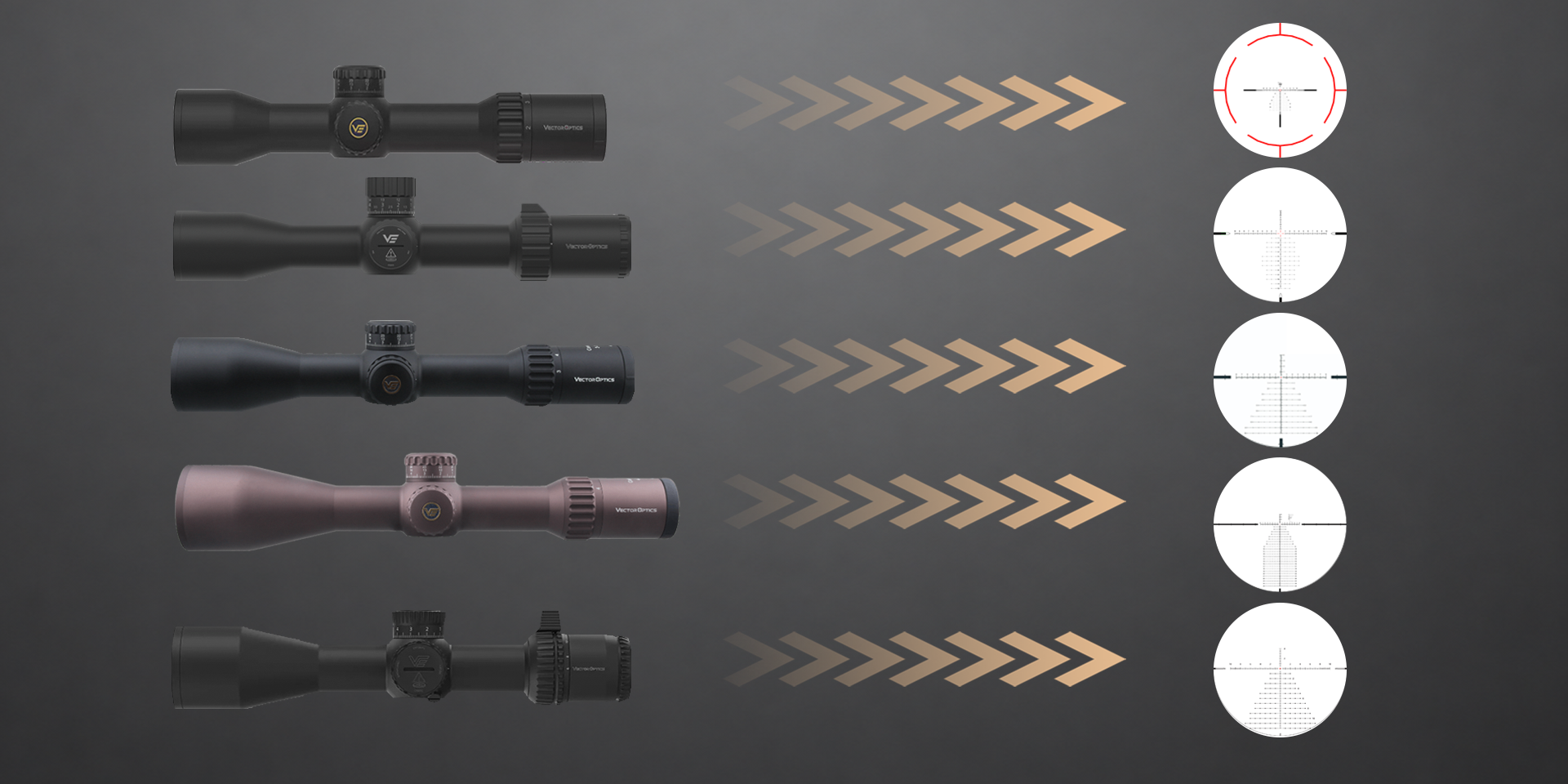
DMR builds generally benefit from more magnification, precise adjustments, and strong optical performance.
Look for:
- Clear glass
- FFP reticle
- Higher magnification
- Repeatable turret adjustments
- Parallax adjustment
- Durable construction
Recommended Options
Continental x6 2-12×44 RAR FFP — SCFF-69
A versatile 2–12× FFP scope with strong elevation range and zero stop.
Tauron 4-16×44 HD MIL FFP — SCFF-79
Built around precise adjustments, with 42 MIL elevation range, zero stop, and turret lock.
Continental x6 3-18×50 VCT FFP — SCFF-28
A balanced choice for extended-range observation and precision.
Continental x6 4-24×56 FFP — SCFF-39
Higher magnification and a large 56 mm objective for extended-range use.
Tauron 3-18×50 GenII — SCFF-64
Combines FFP holdovers, turret dialing, zero stop, and turret lock.
6. Which One Should You Choose?
Go SPR if you want:
- A lighter setup
- Faster handling
- Flexible magnification
- Practical medium-range precision
Go DMR if you want:
- More stability
- Higher magnification
- Greater effective range
- Better performance from supported positions
There’s also plenty of middle ground. A 16-inch AR-15, for example, can be configured toward either role simply by changing the optic and overall setup.
SPR = lighter, faster, more flexible.
DMR = steadier, farther-reaching, more precision-focused.
FAQ
1.Can one rifle work as both an SPR and a DMR?
Yes. Optic choice, barrel profile, weight, stock, and accessories can shift the same rifle toward either role.
2.Is FFP or SFP better for SPR and DMR?
FFP is often preferred for precision setups because the reticle subtensions remain consistent across magnification. SFP can also work well when used at its designated magnification.
3.Should I use a bipod?
A bipod adds stability but also weight. It can be especially useful on DMR-style builds, while a lighter SPR may favor a more mobile support option.
4.Is a DMR the same as a sniper rifle?
No. A DMR focuses on extended-range, repeatable precision with semi-automatic capability, while a sniper rifle is generally optimized for specialized long-range precision.