


Looking for an airgun sport that’s more exciting than shooting paper targets at the range? Hunter Field Target (HFT) might be your next challenge.
HFT combines outdoor target shooting with realistic hunting-style conditions. You’ll face hidden distances, changing terrain, tricky wind, and small targets that demand accuracy.
The best part? You don’t need expensive equipment to get started. This Hunter Field Target beginner guide covers the essential HFT rules, scoring system, shooting techniques, and how to choose the right airgun scope.
1. What Is Hunter Field Target Shooting?
Hunter Field Target (HFT) is an outdoor airgun competition that originated in the UK. Unlike traditional Field Target (FT), which allows more extensive scope adjustments, HFT puts greater emphasis on practical shooting skills.
Competitors shoot at metal animal-shaped targets placed at unknown distances, typically between 8 and 45 yards (7–42 m).
The challenge is to estimate distance, read environmental conditions, and make accurate shots without adjusting your scope during the course.
1.1 How Is an HFT Course Organized?
An HFT course typically features 30 targets arranged across woodland or open terrain.
- Targets are placed at unmarked distances between 8 and 45 yards.
- Shooting Lanes feature designated pegs that competitors must contact while shooting.
- Terrain may include slopes, trees, shadows, and other natural obstacles.
- Shooting Angles vary between uphill, downhill, and level positions.
Every lane brings something different, so adaptability matters just as much as accuracy.
1.2 How Does HFT Scoring Work?
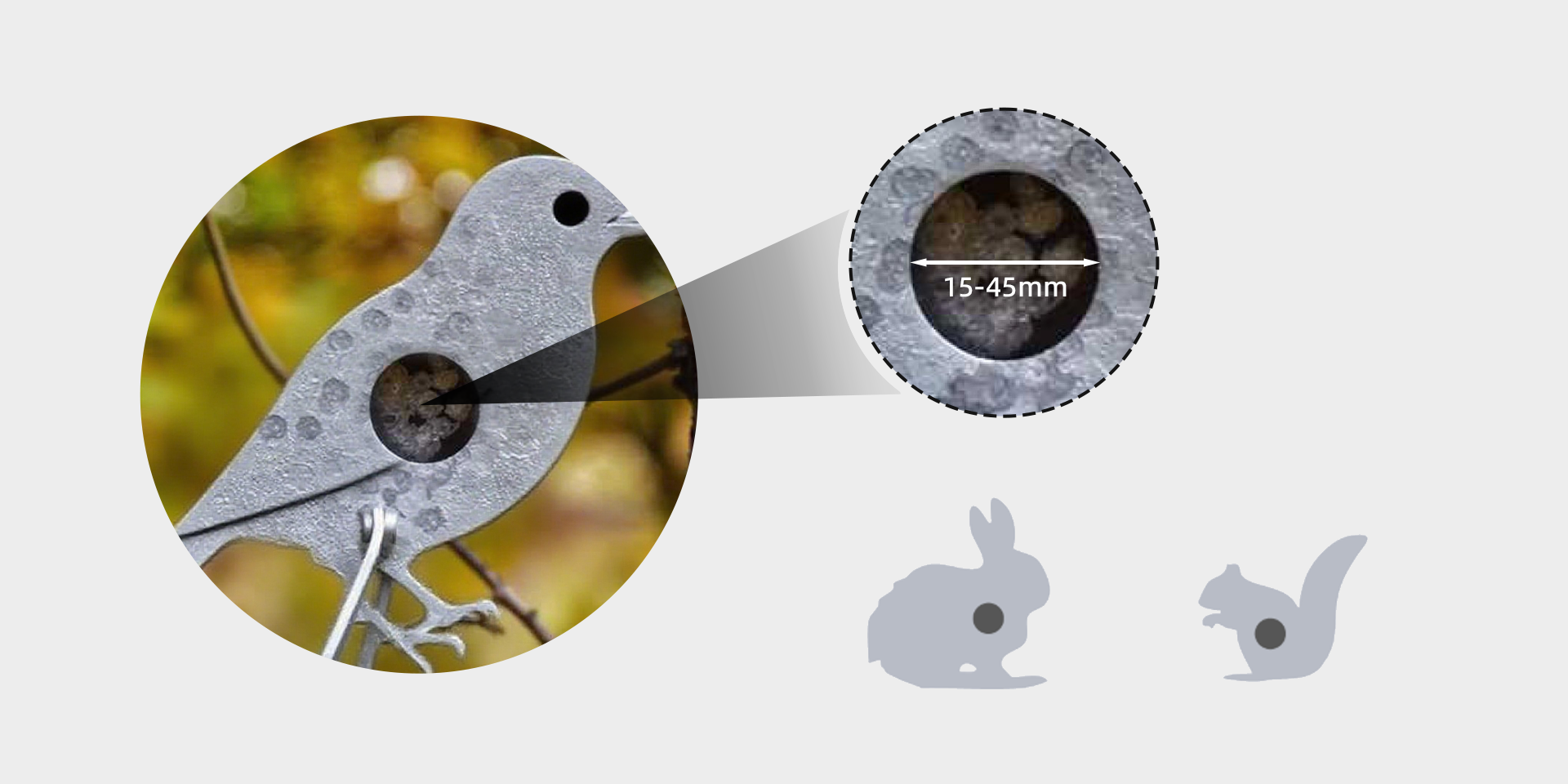
HFT uses knock-down metal targets shaped like rabbits, squirrels, birds, and other small animals.
Each target has a circular kill zone, typically ranging from 15 to 45 mm.
| Result | Points |
|---|---|
| Target falls after a kill-zone hit | 2 |
| Faceplate hit without knocking down the target | 1 |
| Complete miss | 0 |
The scoring is simple, but getting a clean knockdown isn’t always easy.
1.3 What Airguns Are Allowed in HFT?
Both spring-piston and PCP (Pre-Charged Pneumatic) air rifles can compete, depending on the event’s rules.
In UK HFT competitions, muzzle energy is generally limited to 12 ft-lb (approximately 16 J).
Common calibers include .177 (4.5 mm), .22 (5.5 mm), and, where permitted, .25 (6.35 mm).
Typical competition categories include:
- Open Class for .177 PCP rifles
- Recoil Class for .177 spring-piston rifles
- .22 Class for eligible larger-caliber rifles
- Junior, Ladies, and Veteran categories at applicable events
Exact classifications and equipment requirements vary by organizing body.
2. How Do HFT Shooters Handle Unknown Distances?
Here’s where HFT gets interesting. You can’t simply pull out a rangefinder or dial your elevation turret for every target.
Instead, competitors develop their own distance estimation skills.
2.1 Using Parallax and Image Clarity
When a scope’s parallax setting is fixed, targets at different distances may appear less sharp.
Experienced shooters learn to recognize these changes as one of several distance clues.
However, image blur and parallax error aren’t exactly the same thing. Parallax refers to apparent reticle movement relative to the target when eye position changes.
2.2 Estimating Distance with Reticle Bracketing
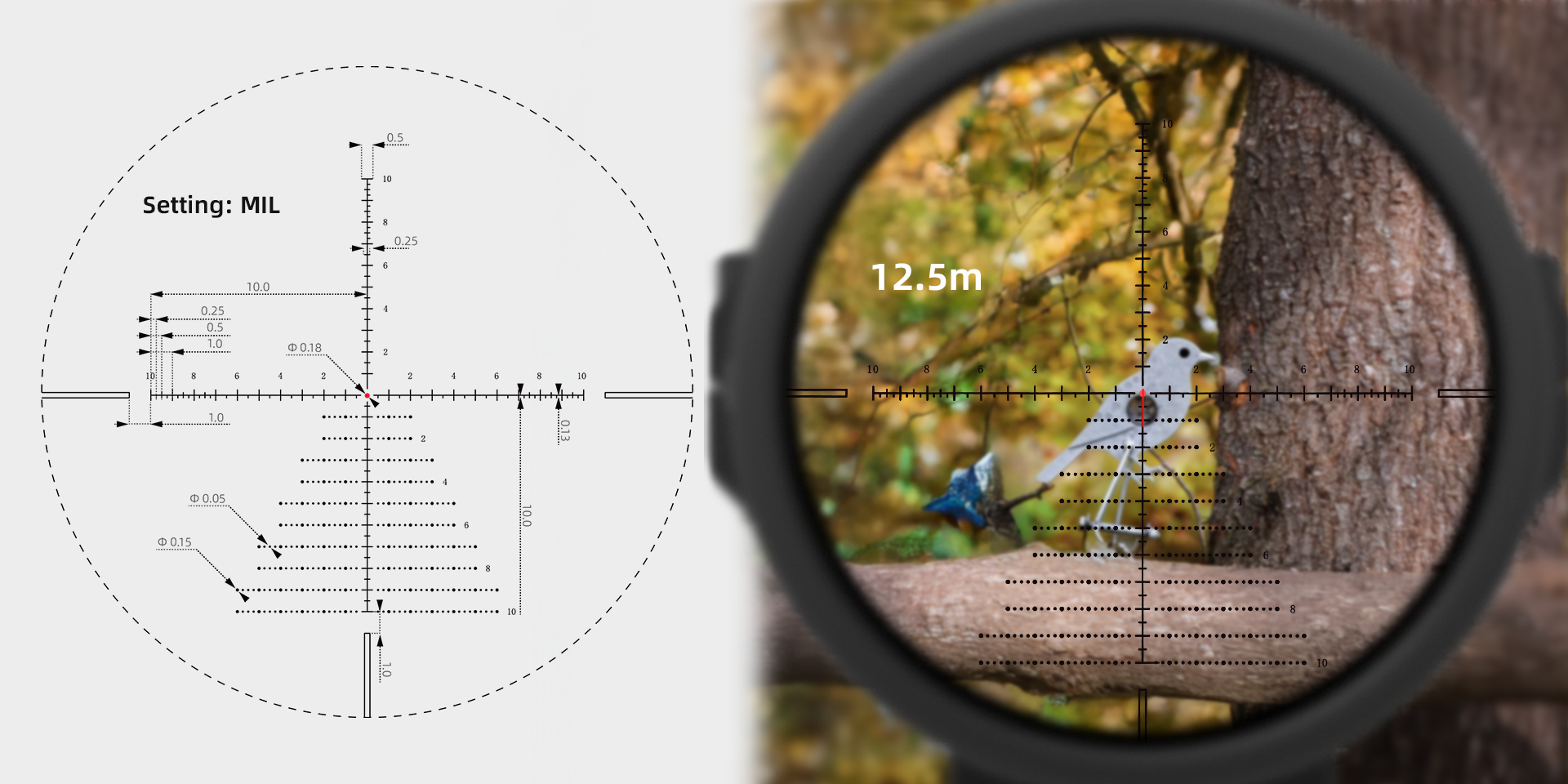
Reticle bracketing uses the apparent size of a known target feature, such as a 40 mm kill zone, against reticle markings to estimate distance.
Once the approximate range is known, shooters use holdover or hold-under rather than adjusting the elevation turret.
This makes reticle familiarity particularly valuable in HFT.
3. What Shooting Positions Are Used in HFT?
HFT uses different shooting positions to recreate the challenges of outdoor field shooting.
- Prone is commonly used for stability and accuracy.
- Kneeling adds difficulty when low obstacles or terrain limit positioning.
- Standing tests balance, control, and consistency without ground support.
Competitors must also follow the designated peg rule, keeping the required contact with the shooting peg.
Some lanes require specific positions, making each course a fresh challenge.
4. What Makes HFT Competition Challenging?
HFT isn’t just about hitting a small target. Several factors can turn an apparently easy shot into a tricky one.
- Unknown Distances make accurate range estimation essential.
- Wind Conditions can influence pellet trajectory.
- Changing Light affects target visibility and perceived distance.
- Uneven Terrain makes stable positioning more difficult.
- Time Limits create pressure to make decisions efficiently.
Competitors typically have around 2–3 minutes per lane, depending on the event.
Since scope settings generally remain unchanged throughout the course, preparation and consistency are especially important.
5. How Do You Choose the Best Scope for HFT?
A good Hunter Field Target scope doesn’t need extreme magnification or complicated tactical features.
Instead, focus on a clear image, repeatable aiming references, and comfortable magnification.
5.1 What Magnification Is Best for HFT?
Many competitors prefer 3-9x or 2-12x rifle scopes, with 9x or 10x being popular settings.
Higher magnification isn’t always better. A narrower field of view and increased sensitivity to movement can make certain shooting positions less comfortable.
Some HFT rule sets limit magnification to 12x, and the chosen setting must remain fixed during the course.
5.2 Should You Choose an FFP or SFP Scope?
SFP (Second Focal Plane) scopes are popular for HFT because the reticle maintains the same apparent size as magnification changes.
Since competitors generally keep magnification fixed, SFP reticle holdover references can remain consistent at the chosen setting.
FFP scopes can also work, provided they meet the event rules and offer a suitable reticle.
5.3 How Should You Set Parallax for HFT?
Parallax settings are normally established before the competition begins.
Many shooters choose a compromise around 25 yards or meters, depending on the scope, target distances, and competition rules.
The aim is to balance image clarity and aiming consistency across the course.
5.4 Which Reticle Works Best for HFT?
A simple Mil-Dot or graduated reticle can be especially useful.
Clear reference marks help with distance estimation, holdover, and hold-under.
Complex Christmas-tree reticles aren’t essential for HFT. A clean, readable design is often easier to use when time is limited.
5.5 Why Does Optical Clarity Matter?
HFT targets may sit in deep shade, bright sunlight, or mixed woodland lighting.
Good glass quality helps shooters distinguish target edges and recognize details at different distances.
When comparing airgun rifle scopes, consider image sharpness, contrast, and comfortable eye relief rather than magnification alone.
For more airgun optics, browse the VictOptics official website or explore Vector Optics Field Target scopes.
6. How Can Beginners Get Started with HFT?
You don’t need a top-tier PCP rifle or an expensive competition scope to enjoy your first HFT event.
Start with a reliable airgun, a suitable optic, and a good understanding of your equipment.
Focus on learning how your setup performs at different distances, recognizing reticle references, and building consistency across shooting positions.
HFT rewards skill and preparation more than expensive gear. That’s what makes it such an accessible and rewarding airgun sport.
FAQ About Hunter Field Target Shooting
1. Is Hunter Field Target Suitable for Complete Beginners?
Yes. Many HFT clubs welcome newcomers, and the basic scoring system is straightforward. Check with a local club about beginner sessions and equipment requirements.
2. How Long Does an HFT Match Usually Last?
A typical competition may take around 2–4 hours, depending on the number of competitors, lanes, and course layout.
3. Can You Use the Same Airgun for HFT and Regular Target Shooting?
Yes, provided the rifle meets the competition’s power and equipment restrictions. A familiar setup can also make the transition into HFT easier.
4. Does Rain Affect HFT Competitions?
Many outdoor matches continue in light rain, but severe weather may cause delays or cancellation. Wet conditions can also make visibility and footing more challenging.
5. Do You Need to Join a Club Before Your First HFT Match?
Not always. Some clubs offer guest participation or introductory events. Contact the organizer to confirm registration, safety requirements, and available facilities.