


When choosing a rifle scope, most shooters focus on magnification, glass quality, and reticle design. However, one important specification that is often overlooked is scope tube size.
The diameter of the scope tube affects more than just the appearance of the optic. It can influence weight, adjustment capability, mounting options, and how well the scope fits different shooting applications.
The three most common rifle scope tube sizes are:
- 1 inch (25.4mm)
- 30mm
- 34mm
Each size has its own strengths and limitations. The best choice depends on your rifle setup, shooting distance, and the type of performance you need.
1. What Is Scope Tube Size?
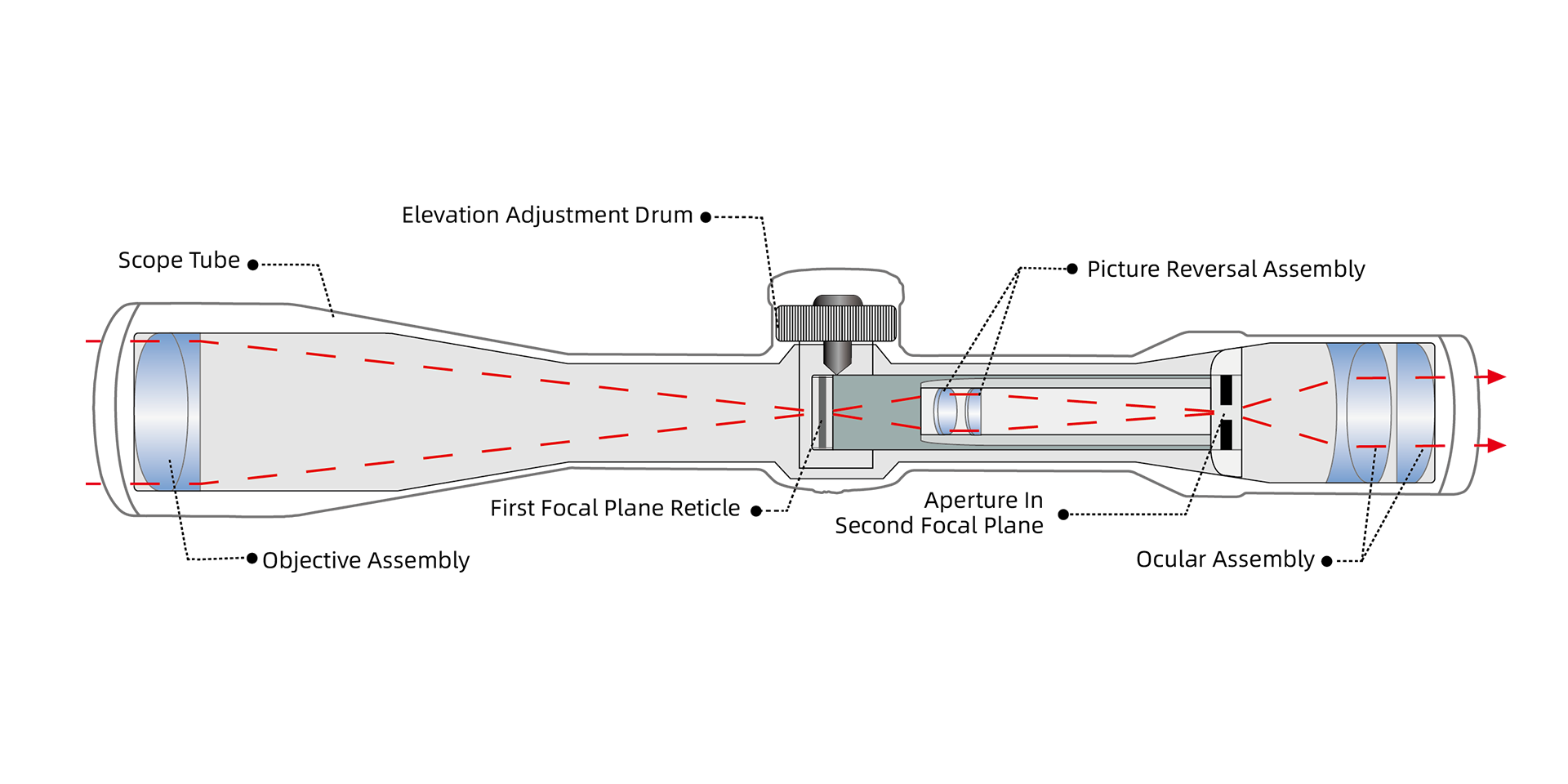
Scope tube size refers to the diameter of the main body of a rifle scope, the section that connects the objective bell and the eyepiece.
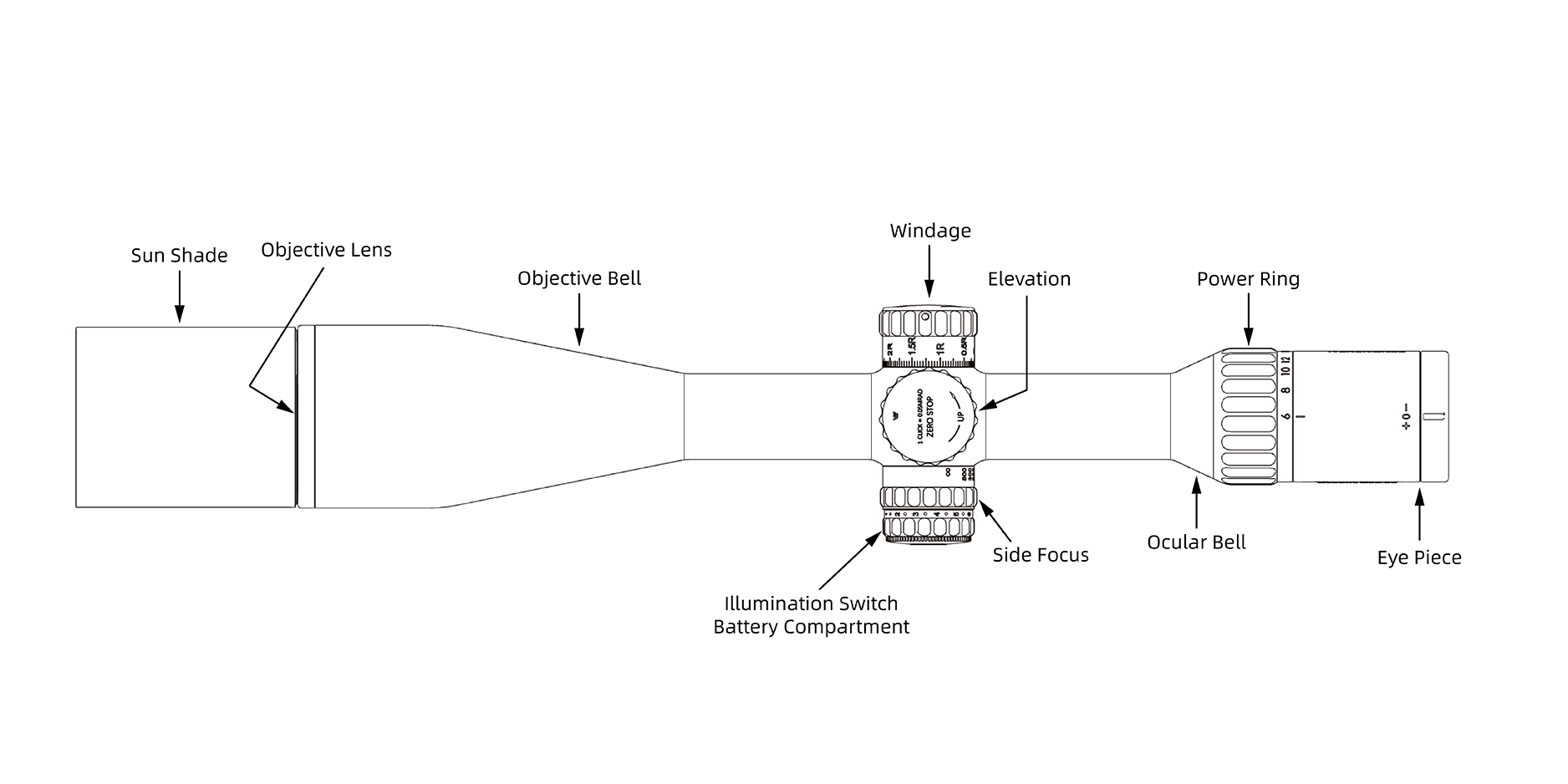
It is usually measured in inches or millimeters.
Although the difference between tube sizes may seem small, the diameter affects several aspects of scope performance, including:
- Internal adjustment space
- Overall weight
- Mounting compatibility
- Long-range capability
A larger tube does not automatically mean a better scope. Instead, different tube sizes are designed for different shooting needs.
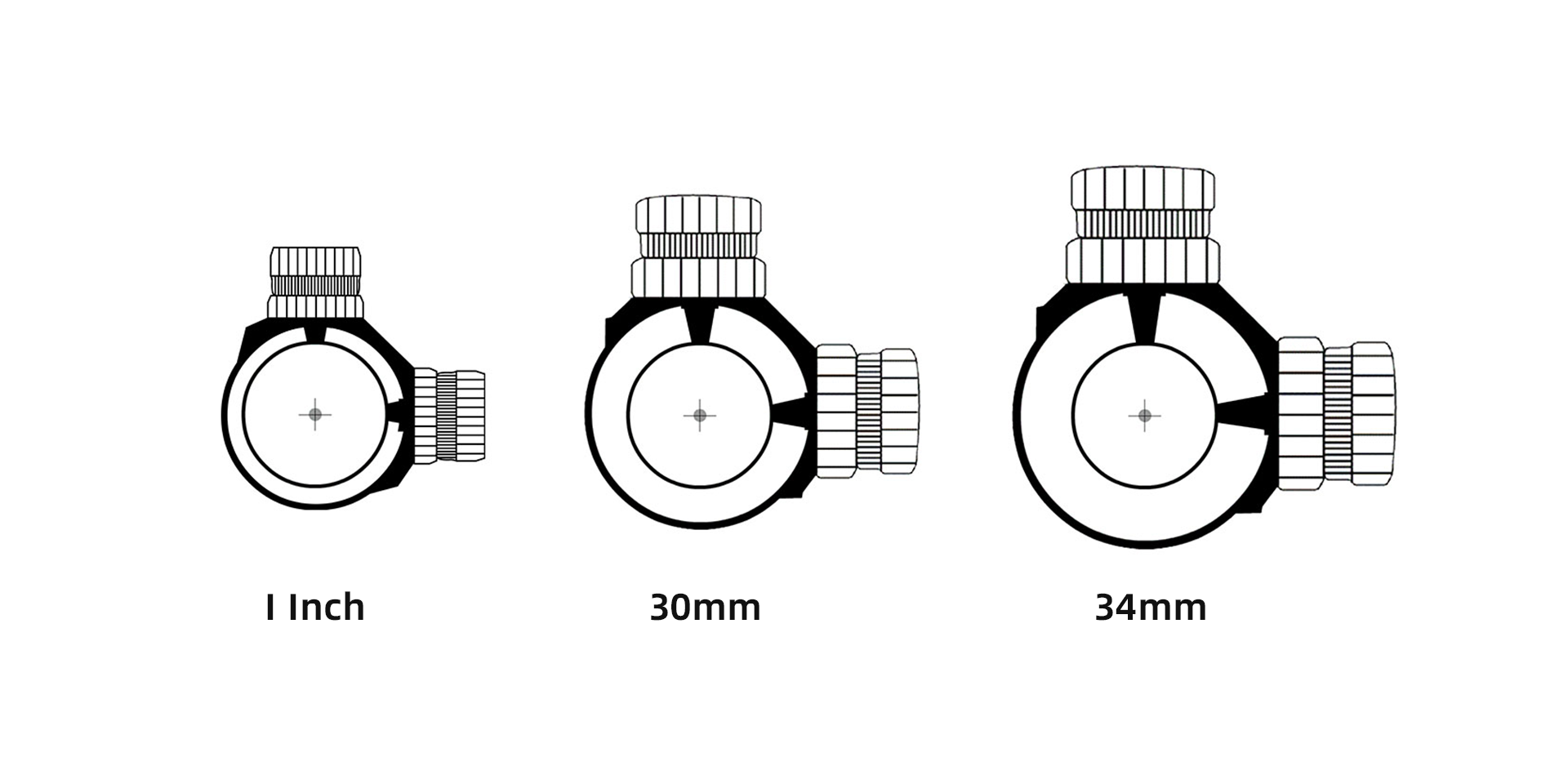
2. What Is a 1 Inch Scope Tube?
The 1 inch scope tube (25.4mm) is a classic design that has been widely used for hunting and general shooting.
Because of its smaller diameter, 1 inch scopes are usually lighter, more compact, and easier to carry. They are a popular choice for hunters who value mobility and simplicity.
Advantages
- Lightweight and easy to carry
- Compact design for hunting rifles
- More affordable
- Wide availability of compatible rings and mounts
Limitations
- Less internal space for adjustment travel
- Not as suitable for extreme long-range shooting
- Usually offers fewer adjustment capabilities compared with larger tubes
Best Use Cases
A 1 inch rifle scope is ideal for:
- Short to medium-range hunting
- General recreational shooting
- Lightweight rifle setups
For shooters looking for a practical and affordable optic, VictOptics offers the SOI series — a lineup of 1 inch tube scopes designed for versatile shooting applications.
3. What Is a 30mm Scope Tube?
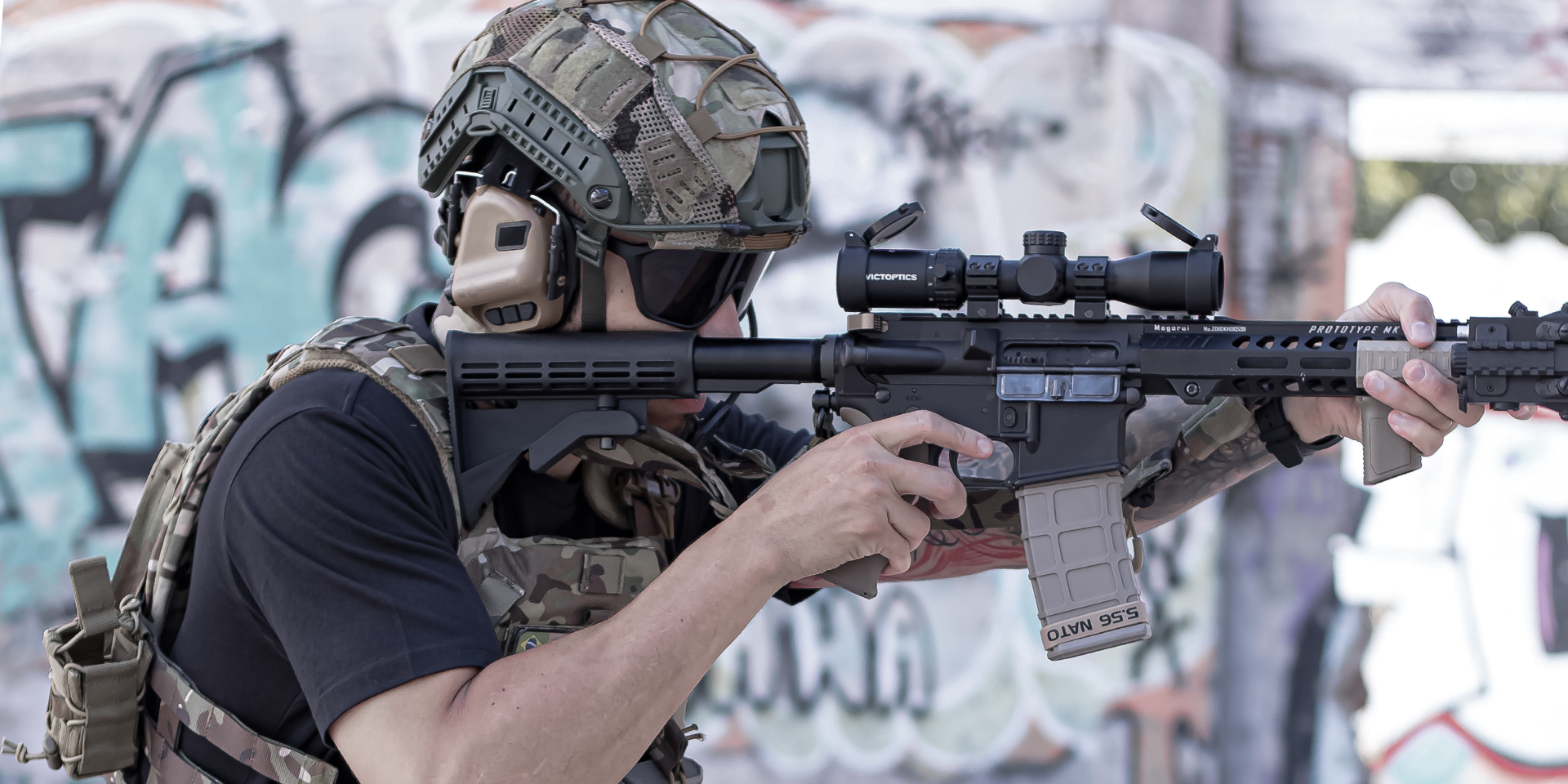
The 30mm scope tube has become one of the most popular choices for modern rifle scopes.
Compared with a 1 inch tube, the larger diameter provides more internal space for optical components and adjustment mechanisms. This makes 30mm scopes a popular choice for shooters who need more flexibility without moving to larger and heavier systems.
Advantages
- Stronger tube construction
- Greater adjustment range
- Better suited for longer-range shooting
- Good balance between weight and performance
Limitations
- Heavier than 1 inch scopes
- Requires 30mm scope rings
- Usually costs slightly more
Best Use Cases
A 30mm rifle scope is well suited for:
- Mid-range to long-range shooting
- Precision shooting
- Hunters who need additional adjustment capability
Vector Optics Veyron GenII series provides modern 30mm tube scope options designed for shooters who want a balance between portability and performance.
4. What Is a 34mm Scope Tube?
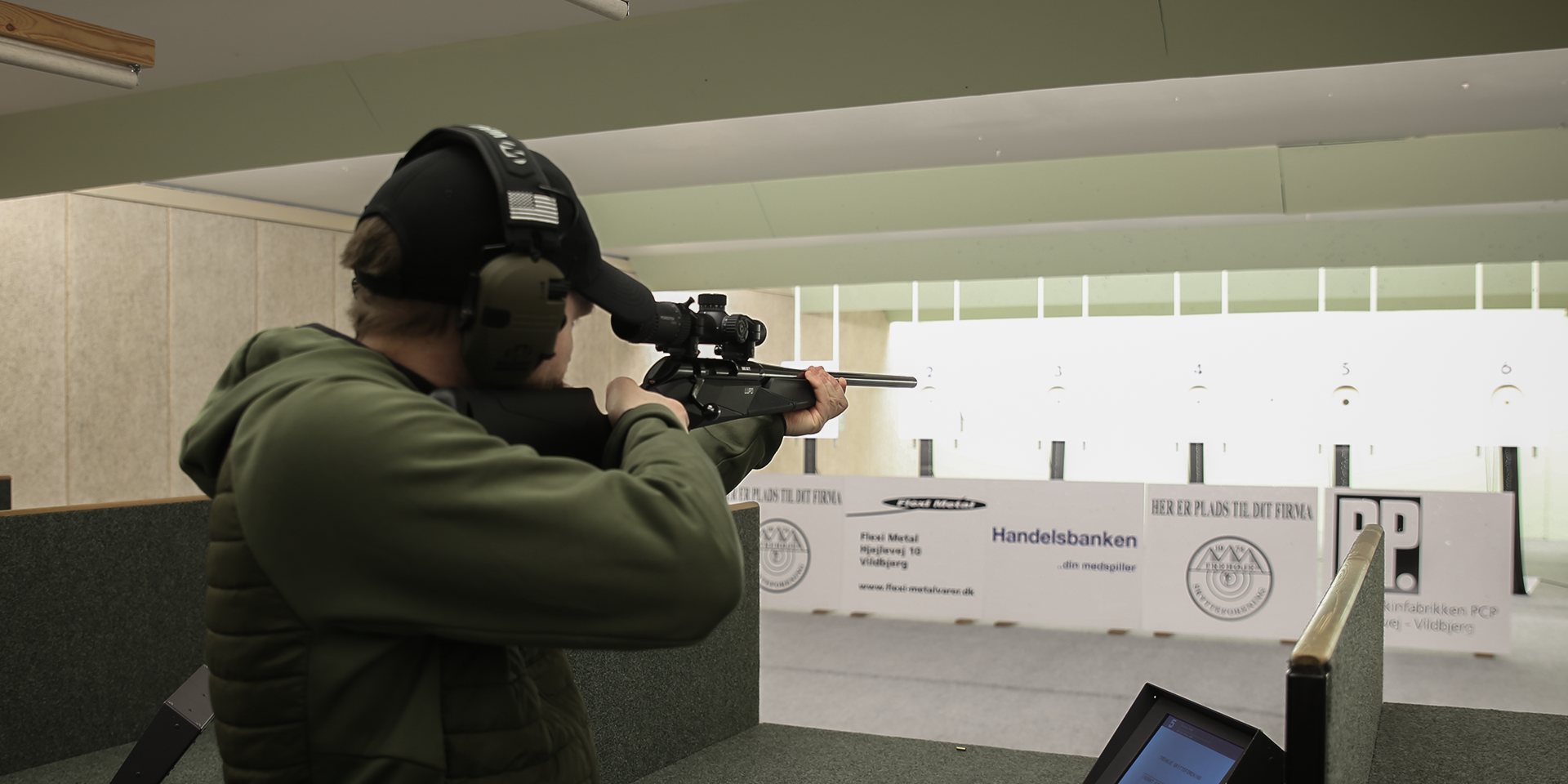
A 34mm scope tube is designed for shooters who demand maximum adjustment capability and advanced performance.
The larger diameter creates additional internal space, allowing manufacturers to build scopes with greater elevation travel, larger adjustment systems, and advanced optical designs.
Advantages
- Maximum adjustment range
- Strong and durable construction
- Better suited for extreme distances
- Supports advanced optical systems
Limitations
- Heavier and bulkier
- Requires specialized 34mm rings or mounts
- Usually more expensive
Best Use Cases
A 34mm rifle scope is commonly used for:
- Extreme long-range shooting
- PRS competitions
- Precision rifle applications
For shooters who need maximum dialing capability and long-range performance, a 34mm tube provides the additional adjustment space required for demanding applications.
5. Does a Bigger Scope Tube Mean Better Light Transmission?
A common misunderstanding is that a larger scope tube automatically allows more light to enter the optic.
The reality is more complicated.
A larger tube provides more room for internal components, but it does not directly determine image brightness.
Light transmission is mainly affected by:
- Optical glass quality
- Lens coatings
- Objective lens size
- Overall optical design
A well-designed 1 inch scope can still provide an excellent image, while a larger tube scope does not automatically guarantee brighter glass.
Scope tube size should be considered as part of the entire optical system, not as the only factor affecting image quality.
6. How to Choose the Right Scope Tube Size?
The best scope tube size depends on your shooting style and priorities.
Shooting Distance: For most shooting within 300 yards, a 1 inch tube is often more than enough. For longer distances, 30mm or 34mm tubes provide additional adjustment capability for compensating bullet drop.
Weight and Mobility: Hunters who spend long hours carrying their rifles often prefer lighter 1 inch scopes. A lighter optic can make a noticeable difference during long hikes or mobile hunting situations.
Adjustment Needs: Long-range shooters often benefit from larger tube sizes because they provide more internal adjustment range. A 30mm or 34mm scope can offer more elevation travel, making it easier to dial for extended distances.
Mounting and Budget: Tube size also affects mounting options. A 1 inch scope generally works with more affordable and widely available rings, while 34mm scopes usually require stronger and more specialized mounts.
7. Why Does Scope Tube Size Matter?
Scope tube size is an important factor when choosing a rifle scope, but it should not be the only consideration.
A larger tube may provide more adjustment capability, while a smaller tube can offer advantages in weight and portability.
The right choice depends on your shooting environment:
- 1 inch tube: lightweight hunting and general shooting
- 30mm tube: balanced performance for versatile applications
- 34mm tube: maximum adjustment for precision and long-range shooting
Before making a decision, also consider optical quality, reticle design, turret performance, and mounting compatibility.
8. Final Thoughts
Choosing between a 1 inch, 30mm, and 34mm scope tube is not about finding the biggest option — it is about finding the right fit.
A lightweight 1 inch scope may be perfect for a mobile hunter, while a 34mm scope may be the better choice for extreme long-range shooting.
Understanding how scope tube size affects weight, adjustment range, and mounting requirements helps you choose a rifle scope that matches your real shooting needs.
FAQ
Q1. Are larger scope tubes harder to mount?
Larger scope tubes can require more attention during installation.
For example, 34mm scopes need compatible rings or mounts, and their larger size may require careful positioning to achieve proper clearance and eye relief.
Q2. Do I need different rails for different scope tube sizes?
No. The rifle rail itself usually remains the same.
Whether you use a 1 inch, 30mm, or 34mm scope tube, the optic can mount to the same Picatinny or Weaver base. The difference is the scope rings or mounting system used to secure the optic.
Get a Free Quote Now!
Feel free to contact us anytime to get the best prices!