


When adjusting a rifle scope, every turret click changes where the bullet lands. At short distances, a small adjustment may seem minor, but at longer ranges, even a tiny correction can affect accuracy.
To make precise corrections, shooters need to understand three key concepts: click value, MOA/MIL systems, and adjustment range.
Click value determines how much the point of impact moves with each turret click, while adjustment range shows how much total correction a rifle scope can provide. Understanding these features helps shooters make more accurate adjustments when zeroing, hunting, or shooting at longer distances.
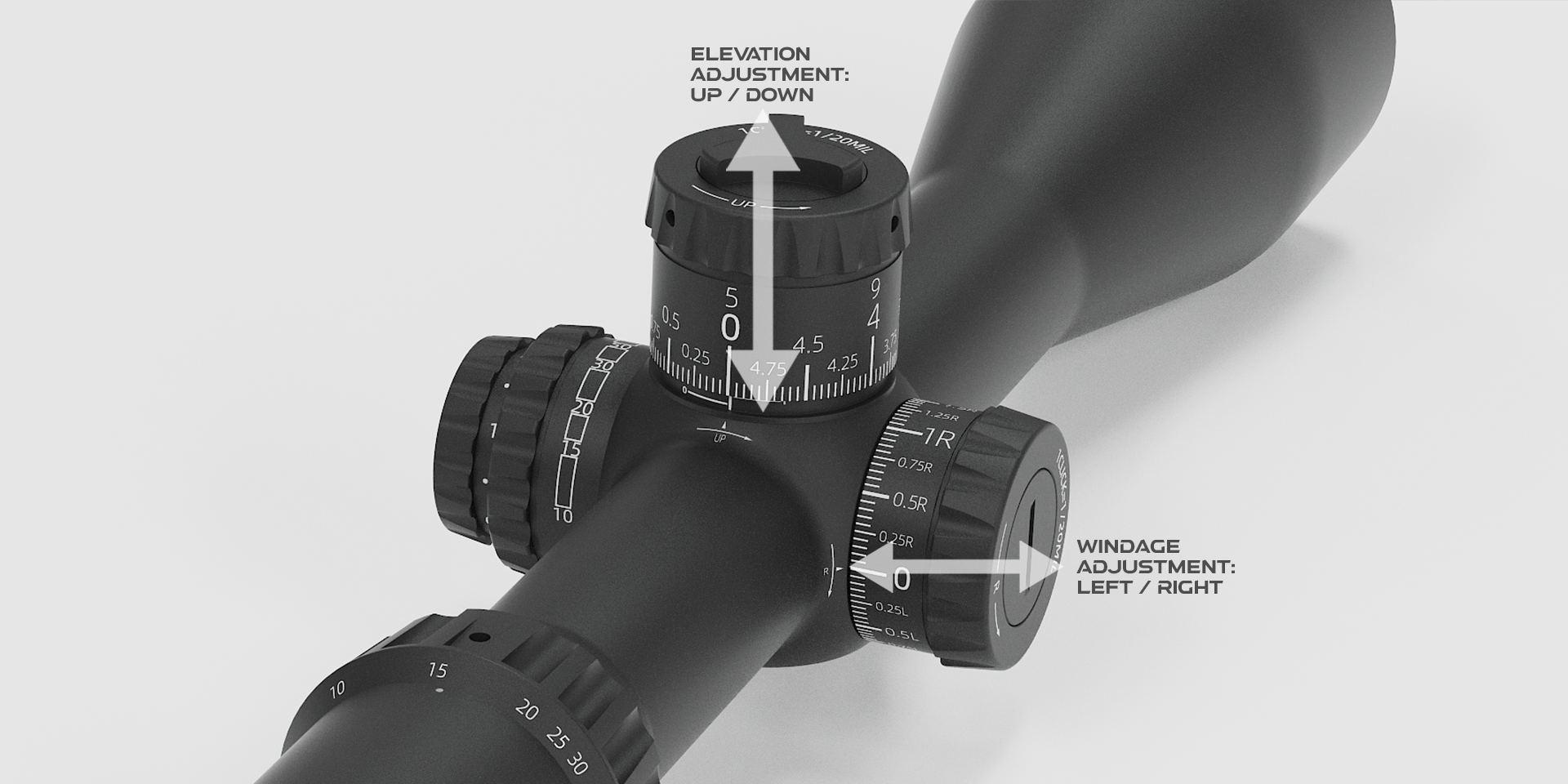
1. What Is Scope Click Value?
Click value refers to how much the bullet’s point of impact changes with each adjustment click on a scope turret.
When you turn the elevation or windage turret, the internal mechanism moves the reticle and changes the aiming point. The amount of movement created by each click is the scope’s click value.
For example, a rifle scope with a 1/4 MOA click value moves the point of impact approximately 0.25 MOA per click.
In simple terms:
- Smaller click value = finer adjustments
- Larger click value = faster adjustments
Understanding click value is important when learning how to adjust a rifle scope, because it allows shooters to calculate exactly how many clicks are needed to correct a shot.
Most rifle scopes use one of two adjustment systems:
- MOA (Minute of Angle)
- MIL (Milliradian / MRAD)
1.1 Understanding MOA Scope Adjustments
MOA is one of the most common adjustment systems used in rifle scopes, especially for hunting and traditional shooting.
MOA is an angular measurement:
- 1 degree = 60 minutes
- 1 MOA = 1/60 degree
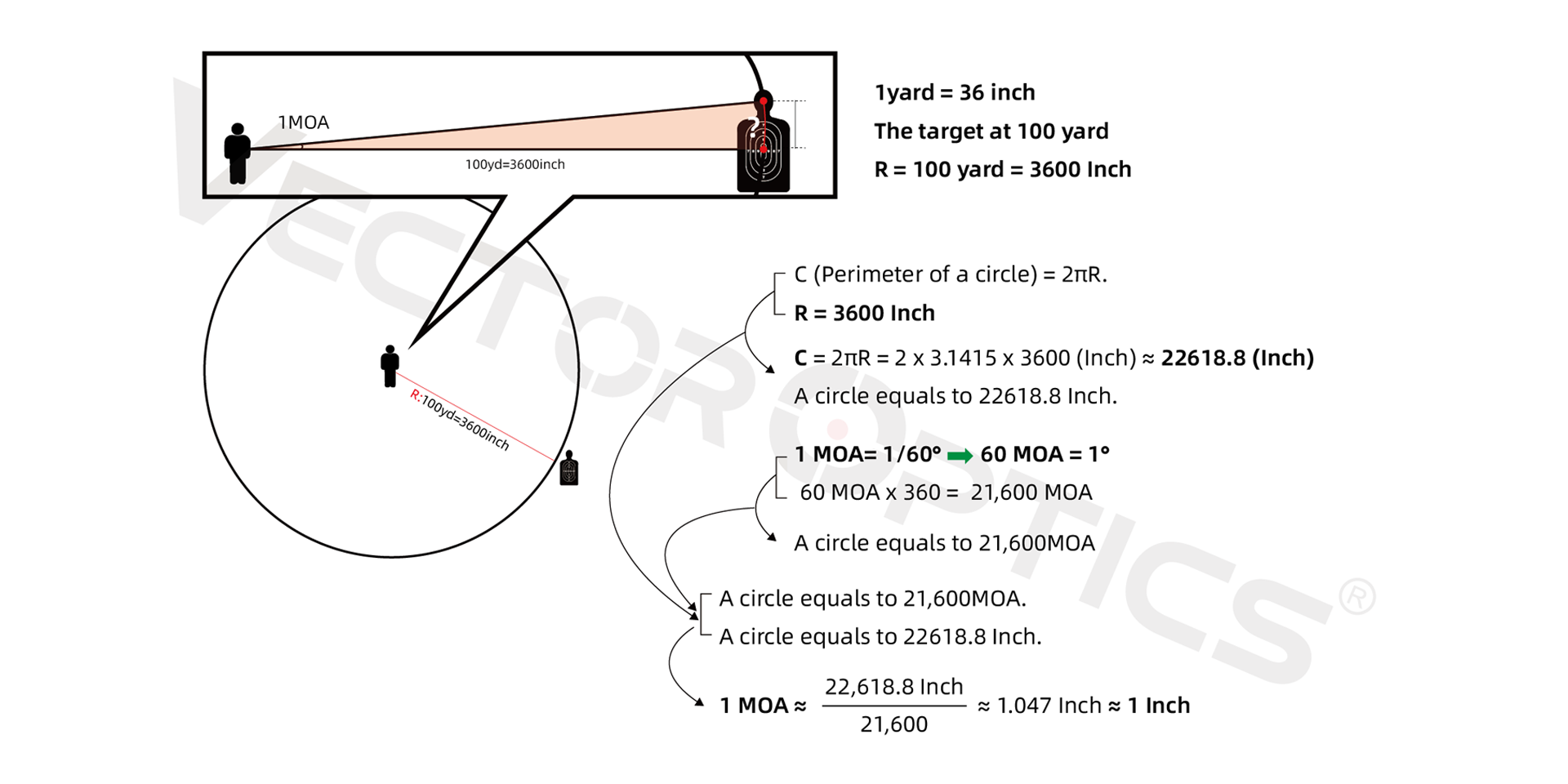
Because MOA is based on angles, the actual movement changes depending on distance.
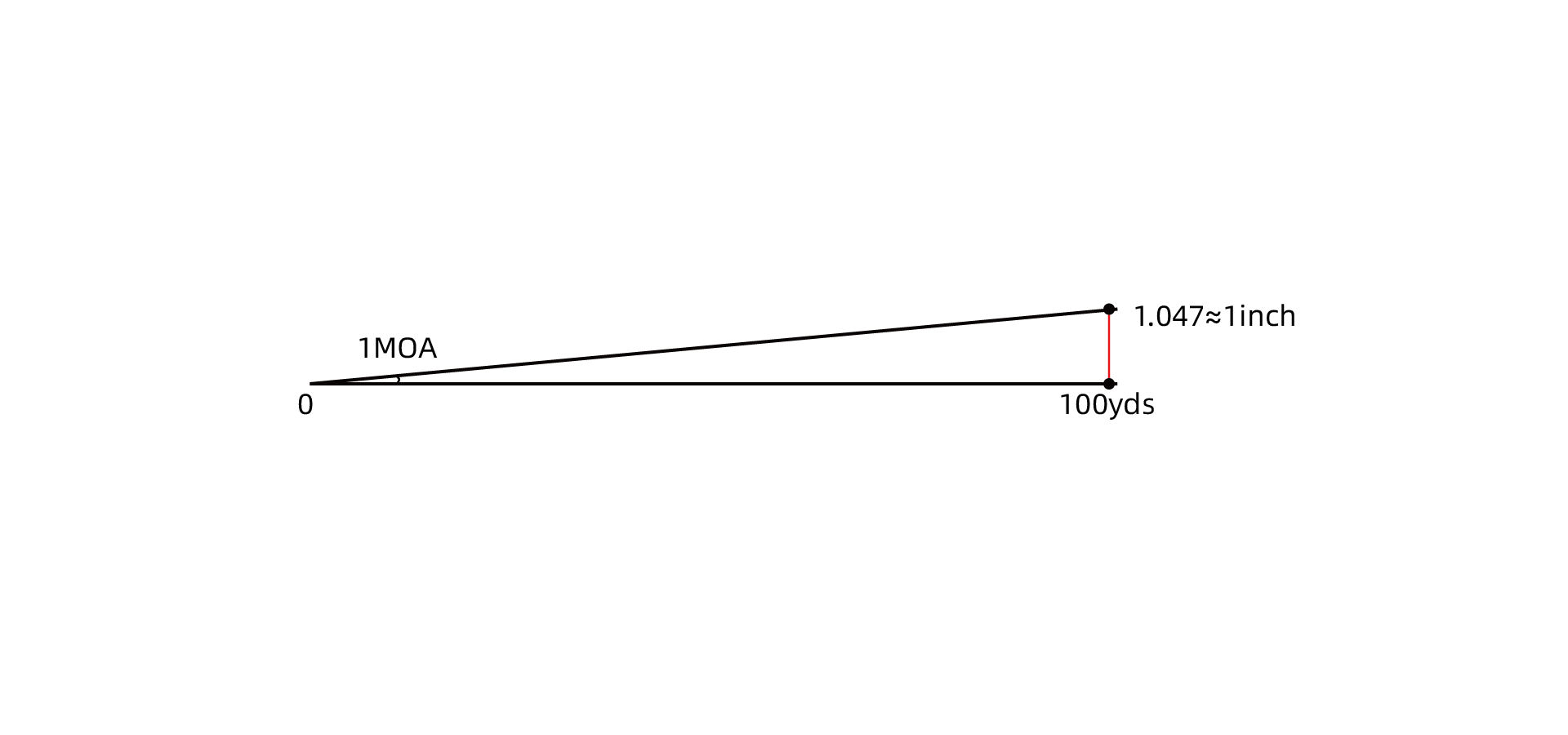
At 100 yards:
1 MOA ≈ 1.047 inches
For quick calculations, many shooters use:
1 MOA ≈ 1 inch at 100 yards
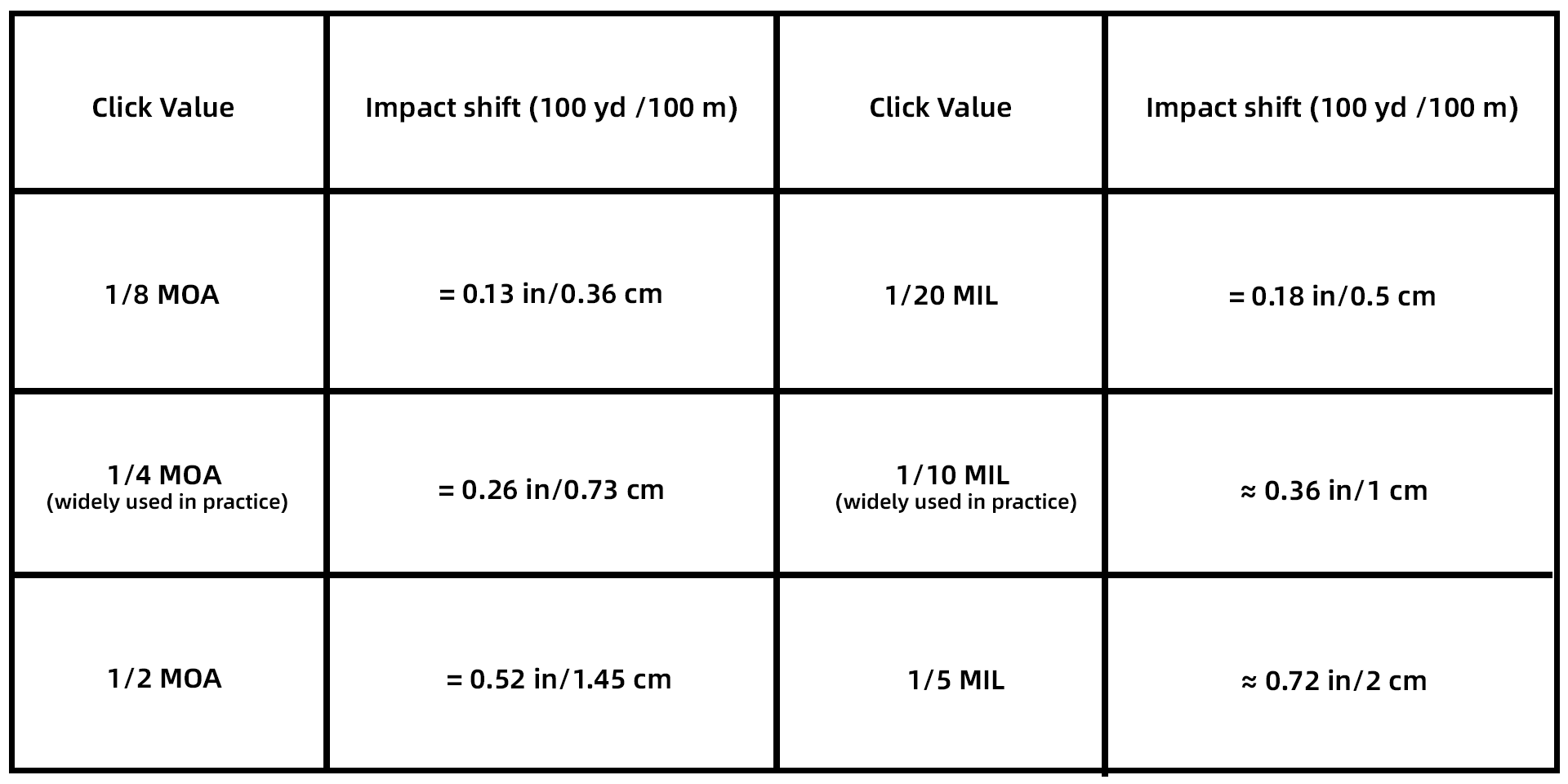
A common turret setting is 1/4 MOA per click.
This means:
- 1 click moves the impact about 0.26 inches at 100 yards
- 4 clicks move the impact about 1 inch at 100 yards
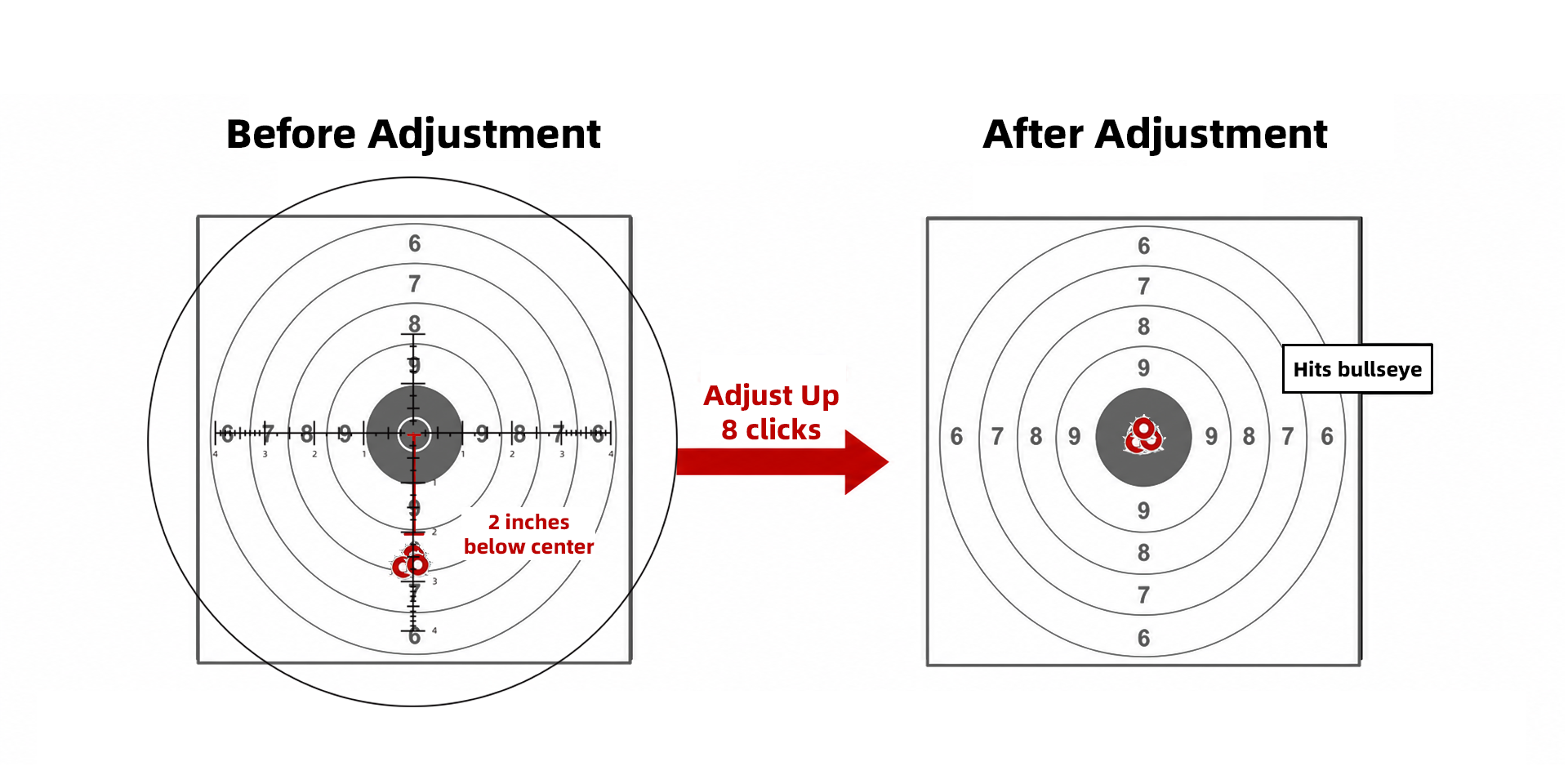
For example, if your shot group lands 2 inches low at 100 yards:
2 MOA ÷ 0.25 MOA per click = 8 clicks
You would dial 8 clicks upward to bring the point of impact closer to the target center.
Smaller MOA click values allow more precise corrections, while larger values allow faster adjustments when speed is more important.
1.2 Understanding MIL Scope Adjustments
MIL, also known as MRAD (Milliradian), is another popular adjustment system used in modern rifle scopes, especially among tactical and long-range shooters.
Unlike MOA, which is commonly used with inches, MIL works naturally with metric measurements.
At:
- 100 meters: 1 MIL ≈ 10 cm
- 100 yards: 1 MIL ≈ 3.6 inches
For example, if your bullet impacts 10 cm low at 100 meters, a 1 MIL adjustment will move the impact approximately 10 cm upward.
Most MIL-based rifle scopes use 0.1 MIL per click, meaning:
- 1 click = 1 cm at 100 meters
This makes MIL adjustments easy to calculate for distance-based corrections, which is why many long-range shooters prefer the system.
2. Does a Smaller Click Value Mean Better Precision?
A smaller click value allows a rifle scope to make finer adjustments.
For example:
- 1/8 MOA provides smaller movement per click than 1/4 MOA
- 0.05 MIL provides finer adjustment than 0.1 MIL
This can be valuable in precision shooting, where small changes can affect the final point of impact.
However, a smaller click value is not always better. Shooters who need fast adjustments may prefer larger increments because fewer clicks are required.
The ideal click value depends on the shooting application:
- Precision shooting → smaller adjustments
- Hunting and general shooting → balanced click values
- Fast dialing situations → larger adjustment increments
Some precision-oriented rifle scopes use fine adjustments, such as 0.05 MIL clicks, for applications like benchrest, F-Class, and extreme long-range shooting where small corrections matter.
3. What Is Adjustment Range on a Rifle Scope?
Adjustment range refers to the maximum amount of elevation and windage correction available from a scope turret.
A rifle scope usually lists two adjustment range specifications:
- Elevation adjustment range
- Windage adjustment range
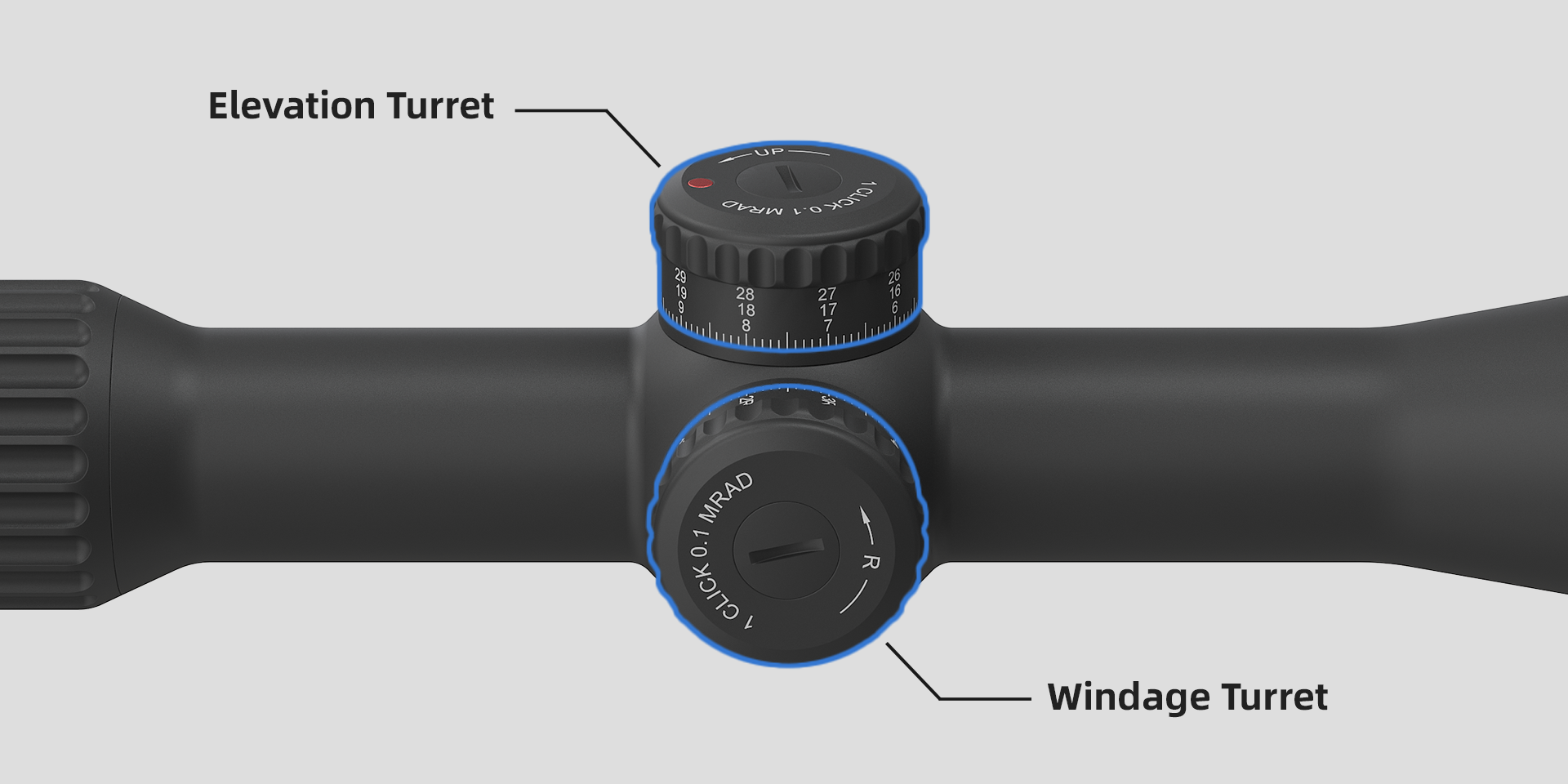
Elevation adjustment controls vertical bullet movement, while windage adjustment controls horizontal movement.
A larger adjustment range gives shooters more room to compensate for:
- bullet drop at longer distances
- changing shooting conditions
- different ammunition performance
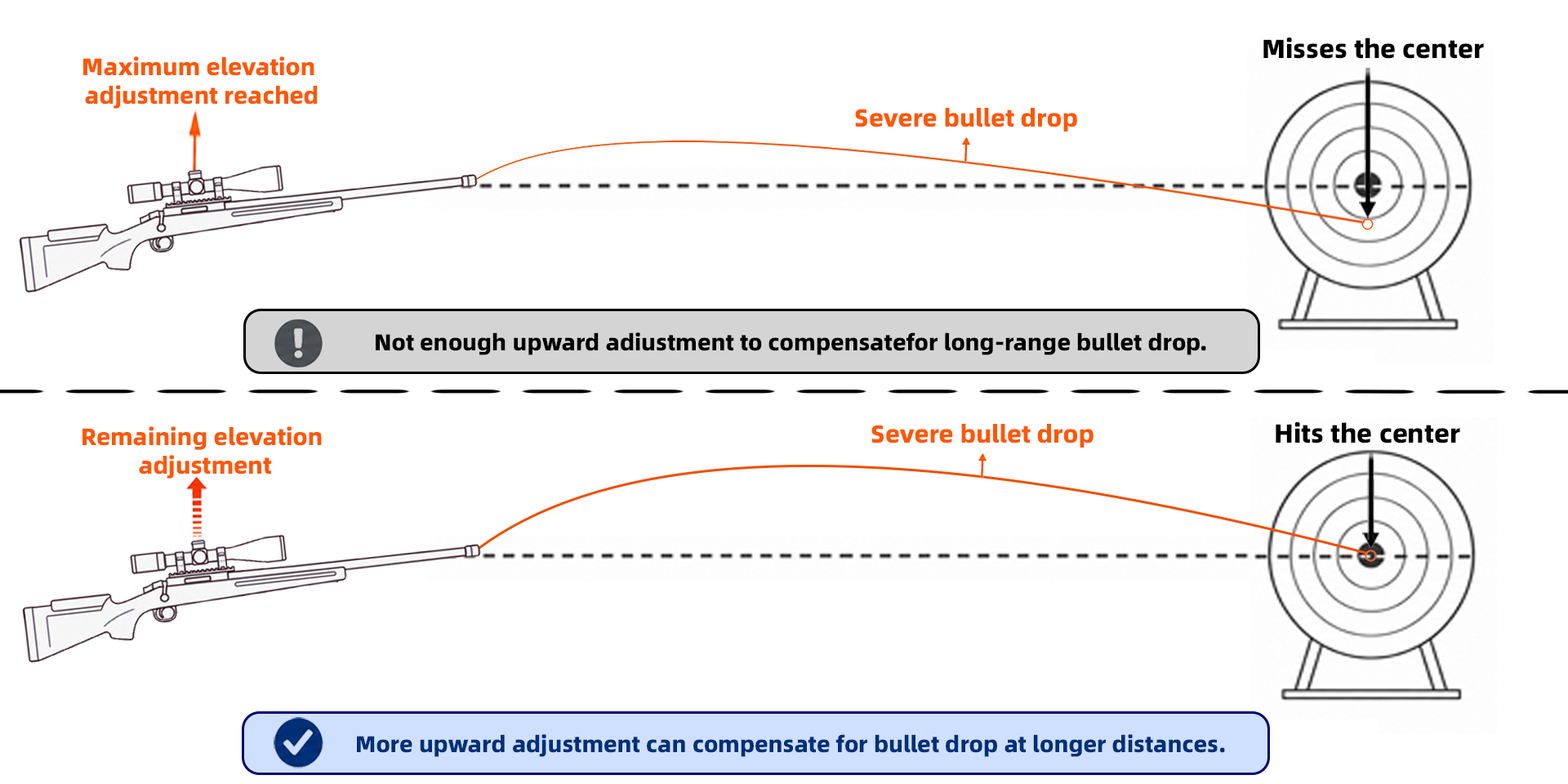
This is especially important for long-range shooting, where bullet drop increases significantly as distance grows.
If a scope does not provide enough internal adjustment, shooters may use angled scope mounts, such as a 20 MOA base, to increase available elevation travel.
4. How to Calculate Scope Turret Clicks
When learning how to adjust a rifle scope, shooters need to convert the bullet impact error into turret clicks.
The calculation depends on whether the scope uses MOA or MIL.
MOA Adjustment Example
Situation:
- Distance: 100 yards
- Impact: 2 inches low
- Click value: 1/4 MOA
At 100 yards:
1 MOA ≈ 1 inch
Correction needed:
2 inches = 2 MOA
Convert MOA to clicks:
2 MOA ÷ 0.25 MOA = 8 clicks
Adjustment: Dial 8 clicks upward.
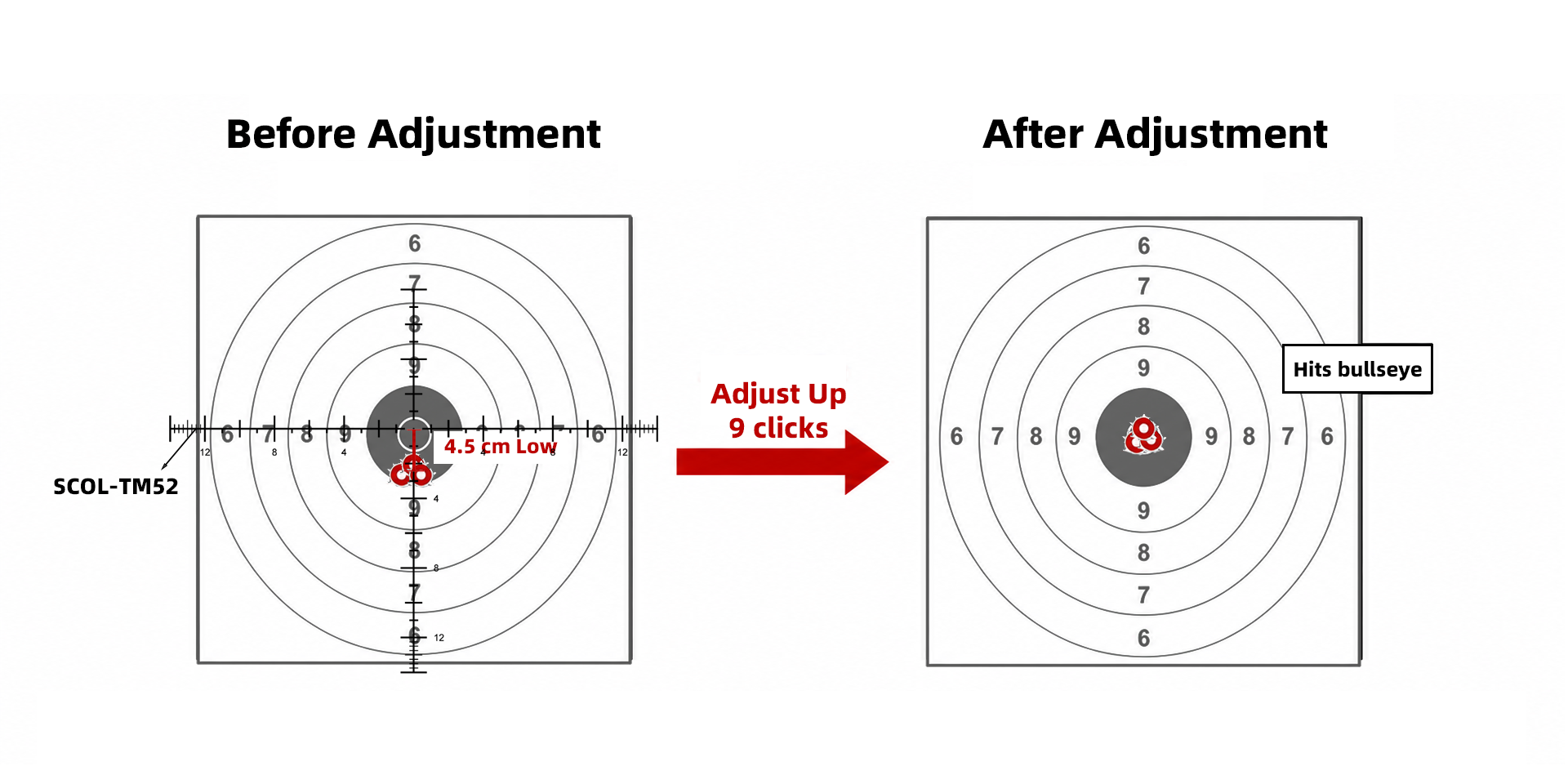
MIL Adjustment Example
Situation:
- Distance: 100 meters
- Impact: 5 cm low
- Click value: 0.1 MIL
At 100 meters:
1 MIL ≈ 10 cm
Correction needed:
5 cm ÷ 10 cm = 0.5 MIL
Convert MIL to clicks:
0.5 MIL ÷ 0.1 MIL = 5 clicks
Adjustment: Dial 5 clicks upward.
5. Conclusion
Understanding click value, MOA, MIL, and adjustment range allows shooters to make more accurate rifle scope adjustments.
Whether you are zeroing a new optic, correcting bullet impact, or dialing for longer distances, knowing how your turret system works gives you more confidence behind the rifle.
A well-designed rifle scope combined with proper adjustment knowledge helps shooters make faster corrections and achieve more consistent results.
FAQ
1. Does a suppressor affect point of impact?
Yes. Installing a suppressor can cause a slight shift in point of impact because the added weight changes barrel harmonics and how the rifle behaves during firing.
The good news is that this shift is usually predictable. Once the suppressor is mounted, simply confirm your zero and adjust your rifle scope if needed.
2. Can an MOA red dot be used for range estimation?
An MOA-based red dot can provide a basic way to estimate distance, but its accuracy depends on knowing the actual size of the target.
Since MOA represents an angular measurement, shooters can use it for rough calculations. However, compared with optics designed specifically for ranging, a standard MOA red dot is not the most precise method.
3. How do you set eye relief on a rifle scope?
Proper eye relief starts with finding a comfortable shooting position.
Mount your rifle naturally, then move the scope forward or backward until you can see a full image without dark edges or shadowing. Once the position provides a clear view and comfortable head placement, tighten the scope mounts and confirm the setup.
Get a Free Quote Now!
Feel free to contact us anytime to get the best prices!