


When choosing a rifle scope, most shooters naturally focus on magnification, glass quality, and reticle design. However, there is another factor that can greatly affect the shooting experience: eye box.
A scope with a comfortable eye box allows you to quickly find a clear sight picture without needing perfect head positioning every time. On the other hand, a restrictive scope eye box can make shooting feel slower and less natural, especially during fast-paced situations.
Whether you are hunting, competing, or using a rifle for tactical applications, a forgiving eye box scope can make a noticeable difference in speed, comfort, and consistency.
1. What Is an Eye Box on a Scope?
Have you ever looked through a scope and immediately seen a bright, full image? That smooth experience comes from having a good scope eyebox.
Simply put, the eye box is the three-dimensional viewing area behind the scope where your eye can move while still maintaining a complete sight picture.
Think of it as a “comfort zone” behind the optic. As long as your eye stays within this area, you can see the target and reticle clearly. Move too far outside this zone, and you may notice:
- dark shadows around the image
- reduced field of view
- partial or complete blackout
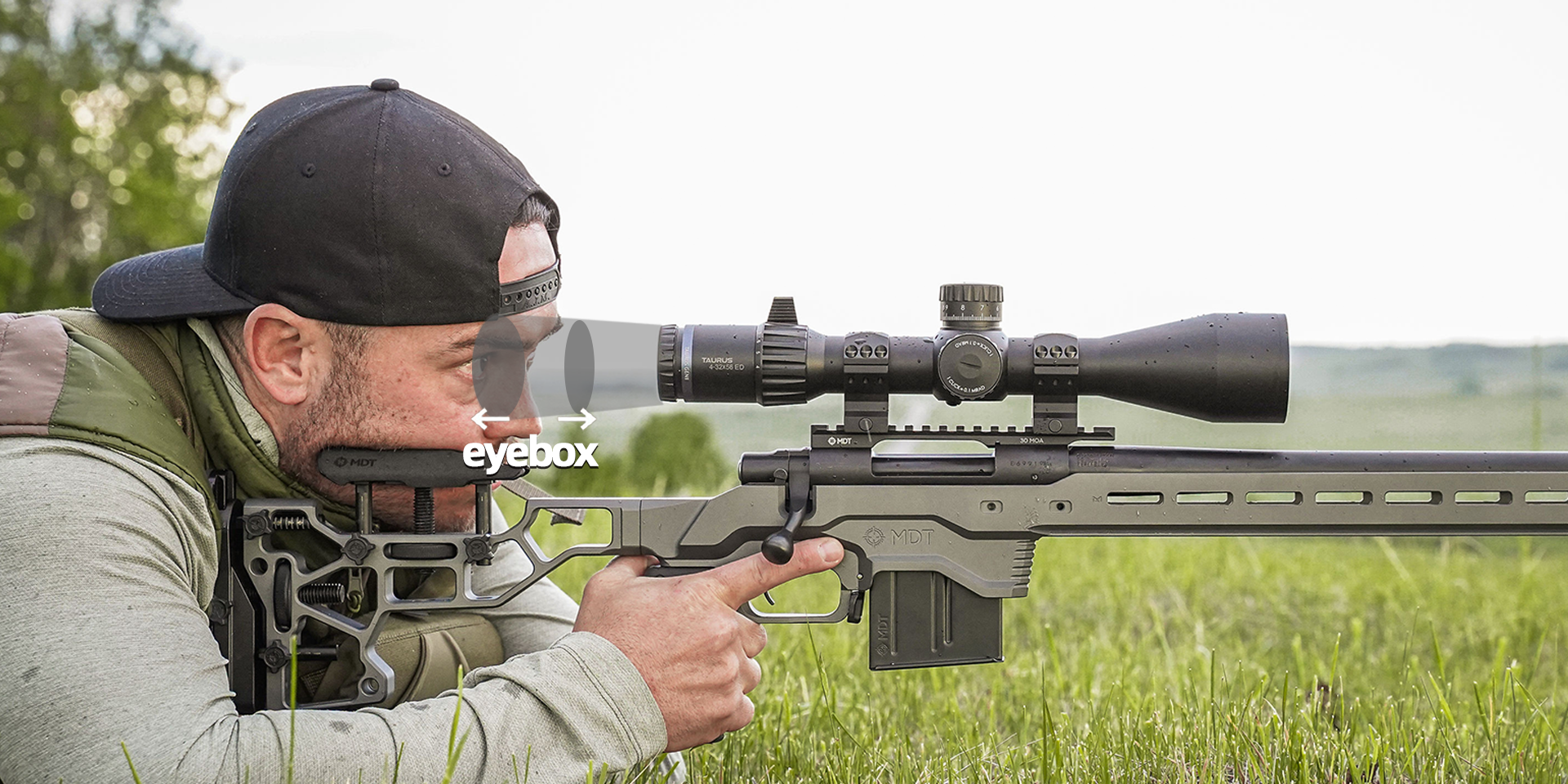
The difference is easy to understand:
- Large eye box = more forgiving head position
- Small eye box = more precise eye alignment required
This is why shooters often describe a scope as having either a “forgiving” or “tight” eyebox.
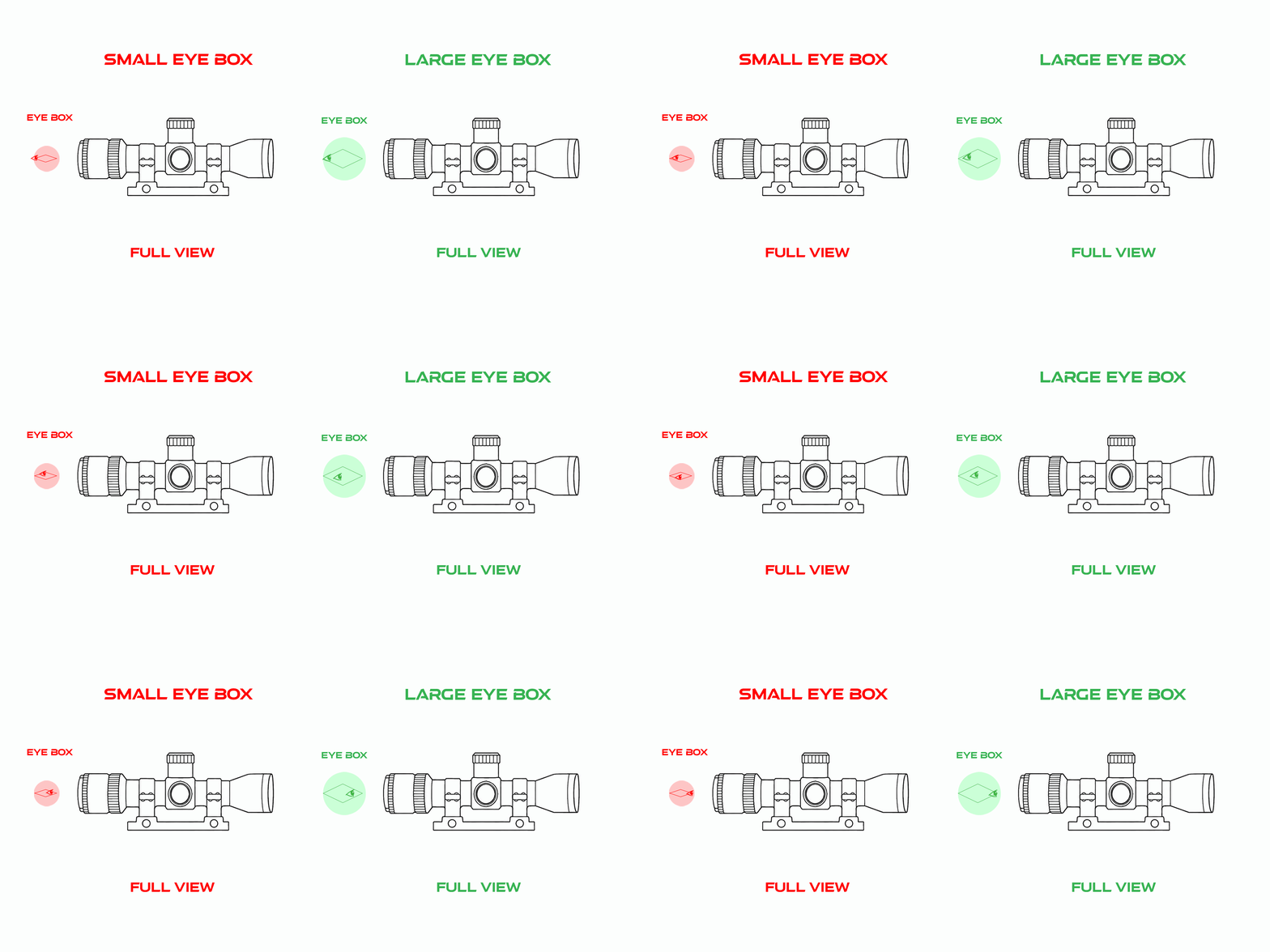
A forgiving scope eyebox helps shooters:
- Get on target faster
- Maintain a more natural shooting position
- Reduce distracting scope shadows
- Stay comfortable during longer shooting sessions
For hunting, competition, and tactical shooting, a comfortable eyebox scope can greatly improve usability.
2. What Determines Scope Eye Box Performance?
Eye box is not usually shown as a standard specification, but it is influenced by several important optical factors.
2.1 Exit Pupil
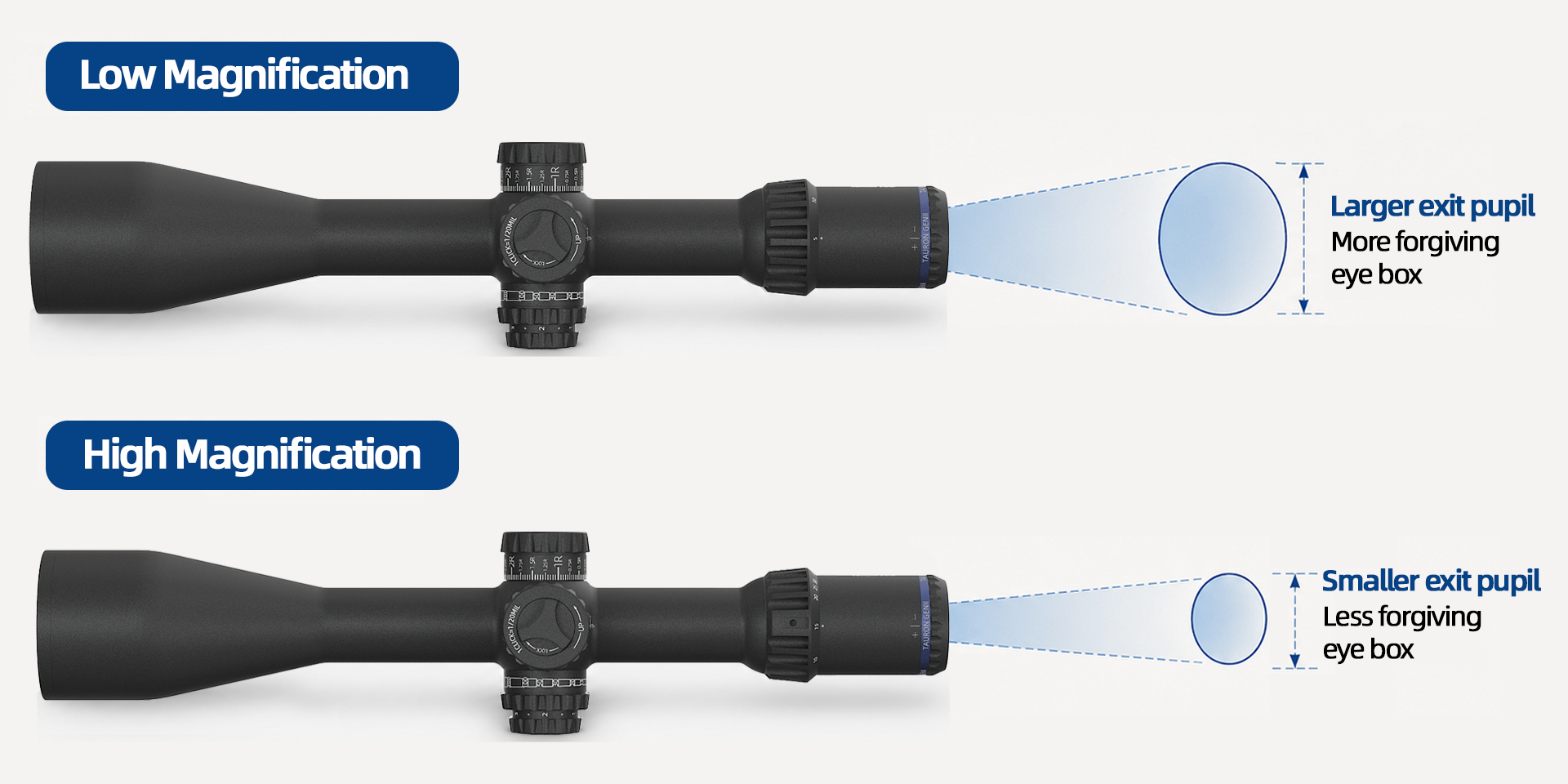
Exit pupil describes the diameter of the light beam that reaches your eye through the scope.
A larger exit pupil generally provides more room for eye movement, making the optic feel more forgiving.
This is why scopes often feel easier to use at lower magnification settings. Lower power typically creates a larger exit pupil and a more comfortable eyebox optical experience.
2.2 Eye Relief
Many shooters often confuse eye box and eye relief, but understanding the difference between these two terms is important when choosing a rifle scope.
Eye relief refers to the distance between your eye and the scope where the full image can be seen.
Eye box describes how much movement your eye has while staying within that usable viewing area.
A simple comparison:
- Eye relief = the correct distance from the scope
- Eye box = the amount of freedom around that position
Both factors work together to determine how comfortable an optic feels.
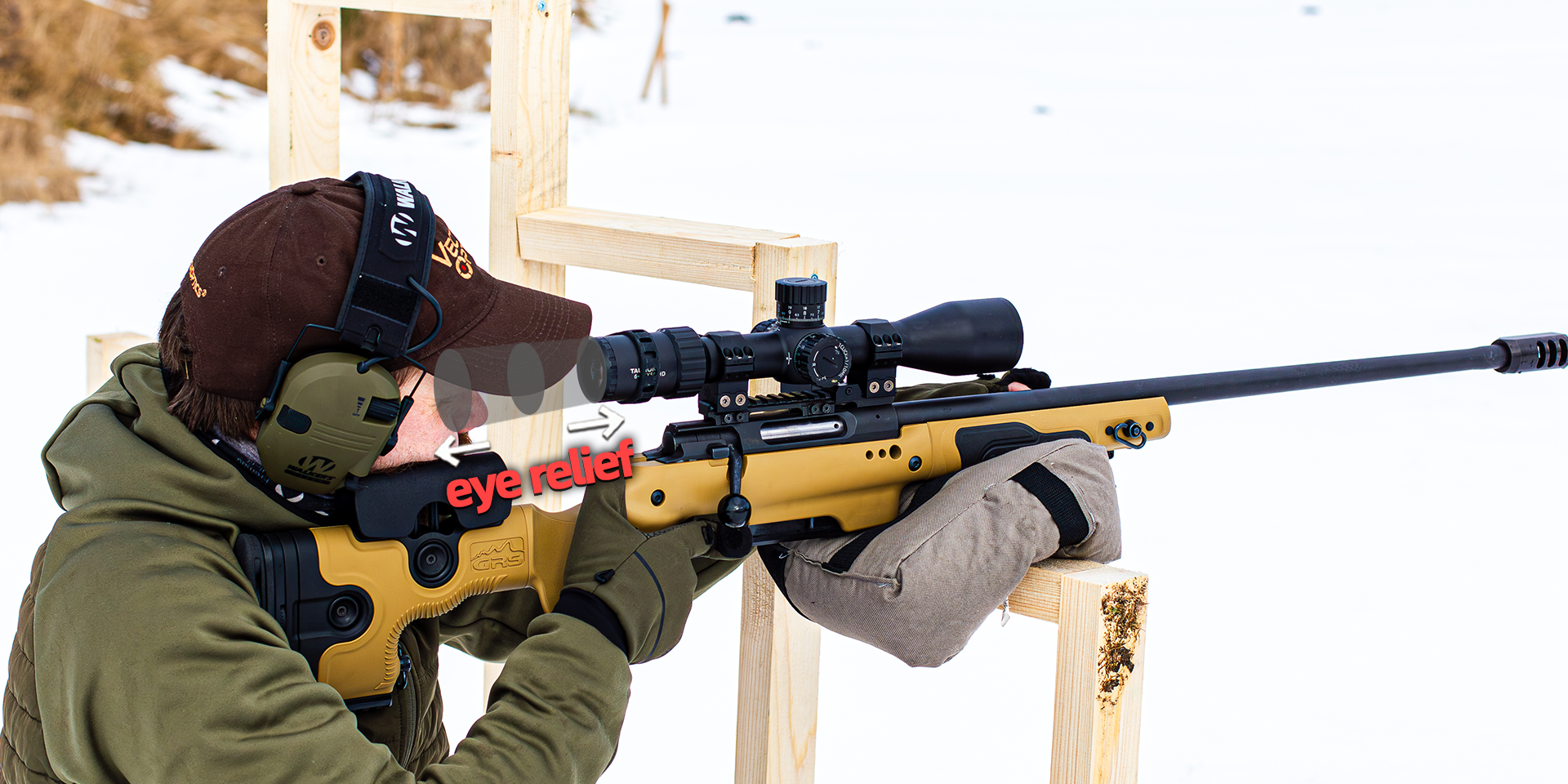
The combination of exit pupil, eye relief, and optical design plays a major role in determining how comfortable and forgiving a scope feels during shooting.
3. Why Does Eye Box Become More Limited at High Magnification?
A common experience among shooters is:
“The scope feels fast at low power but becomes harder to use at maximum magnification.”
This is a normal characteristic of rifle scope design.
As magnification increases:
- Exit pupil becomes smaller
- The usable viewing area becomes narrower
- Eye position becomes more critical
Shooters may notice:
- More sensitivity to head movement
- Increased scope shadow
- Slower target acquisition
Even premium optics cannot completely avoid this trade-off. The goal of a good eyebox scope is to provide the most forgiving experience possible while maintaining magnification performance.
4. Eye Box Comparison: LPVO, MPVO, and Prism Scopes
Different optic types are designed for different shooting scenarios, so their eye box requirements are also different.
| Optic Type | Common Application | Eye Box Focus |
|---|---|---|
| LPVO | Close to medium range shooting, fast transitions | Fast and forgiving sight acquisition |
| MPVO | Precision shooting, hunting, longer distances | Comfortable viewing at higher magnification |
| Prism Scope | Compact rifles, fast aiming setups | Consistent alignment in a small package |
In general:
- LPVOs prioritize speed and flexibility
- MPVOs focus on stability and precision
- Prism scopes balance compact size with consistent aiming
5. Scopes Designed for Comfortable Eye Box Performance
Some optics are built with a focus on a more forgiving viewing experience:
- Continental Series Rifle Scope
- Forester Series Rifle Scope
- Paragon Mini 1×18 Prism Scope (SCPS-M10)
- VictOptics S6 LPVO Rifle Scope
These optics are designed to provide easier target acquisition and comfortable viewing across different shooting applications.
6. How to Improve Your Eye Box Experience
Think of the eye box as the “comfort zone” behind your scope. It gives your eye room to move while keeping the image clear and usable. A great eye box is not just about numbers — it is about how fast you can shoulder your rifle and instantly get a clean sight picture.
From LPVOs to MPVOs and prism scopes, a forgiving eye box helps shooters stay faster, more comfortable, and more consistent when it matters.
FAQ
Q1. Can scope mounting affect eye box performance?
Yes. The way a scope is mounted can have a direct impact on how easily you achieve a clear sight picture. Mounting height, eye position, stock setup, and cheek weld all affect how naturally your eye lines up with the eye box. Proper adjustment can improve both comfort and shooting consistency.
Q2. Why do scopes with similar specifications have different eye box performance?
Because eye box performance depends on much more than magnification and objective lens size. Factors such as lens arrangement, optical design, internal structure, and overall glass quality all influence how forgiving a scope eye box feels.
Q3. What is the difference between eye box and eye relief?
Eye relief refers to the ideal distance between your eye and the eyepiece where you can see the full image.
Eye box describes the amount of movement your eye has around that position while still maintaining a clear sight picture.
Understanding eye box vs eye relief can help shooters better evaluate scope comfort and usability.
Q4. Does a larger objective lens always provide a larger eye box?
Not necessarily. A larger objective lens can help provide a larger exit pupil under certain magnification settings, which may improve viewing flexibility. However, overall eyebox scope performance depends on multiple elements, including magnification, eye relief, exit pupil, and optical design.
Get a Free Quote Now!
Feel free to contact us anytime to get the best prices!