


A rifle scope is more than just glass and magnification. Behind every accurate shot is a precise adjustment system that allows shooters to compensate for distance, bullet drop, and wind changes.
That system starts with the scope turrets.
Whether you are dialing for a long-range shot, adjusting your zero at the range, or making quick corrections in the field, reliable rifle scope turrets help translate your adjustments into predictable changes on target.
For hunters, competition shooters, and long-range enthusiasts, understanding how a turret system works can make the difference between simply owning a scope and truly getting the most out of it.
1. What Are Rifle Scope Turrets and How Do They Work?
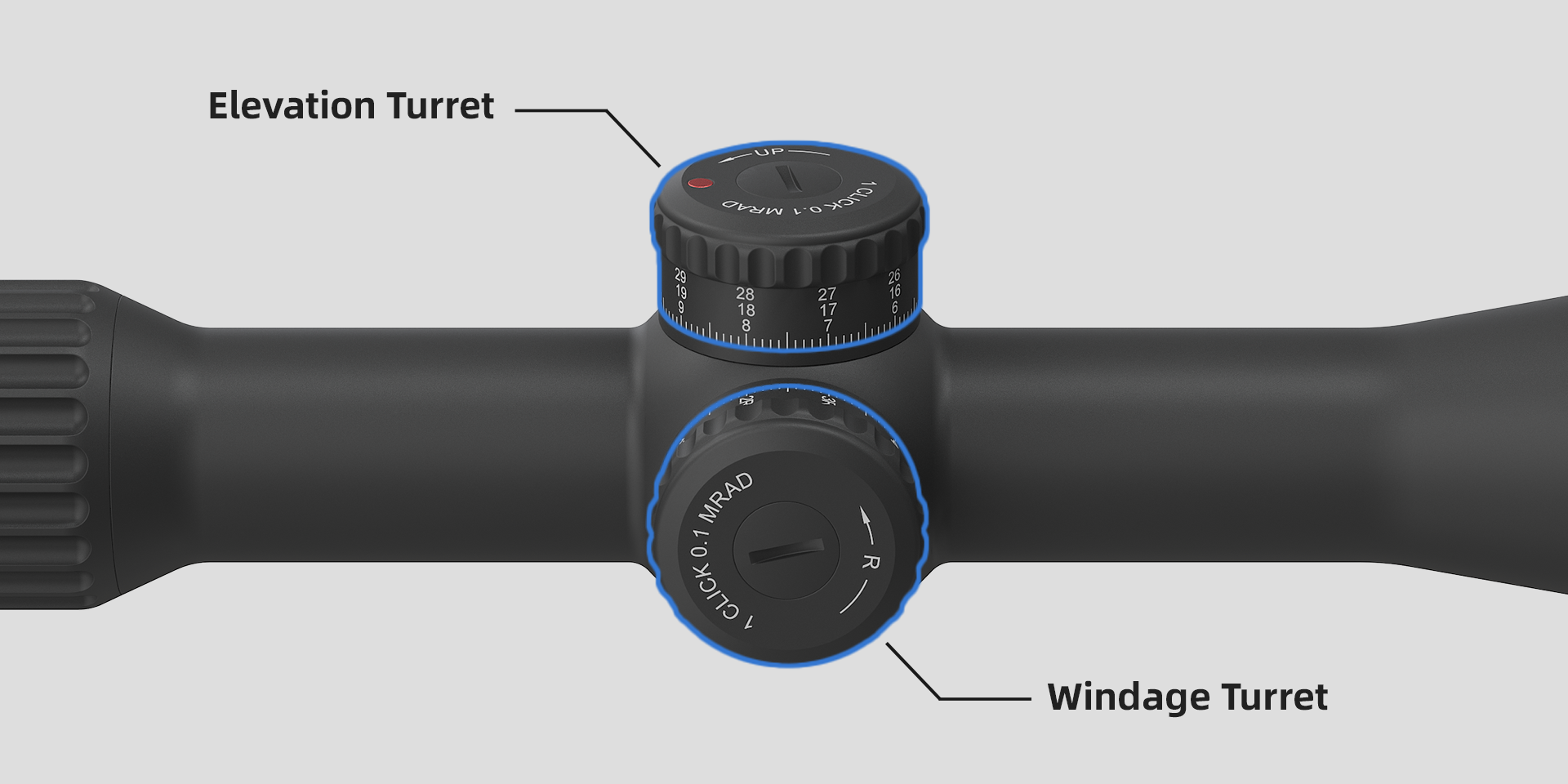
Scope turrets are the adjustment knobs located on the outside of a rifle scope. They control two main corrections:
- Elevation adjustment — moves the point of impact up or down
- Windage adjustment — moves the point of impact left or right
By turning the turrets, shooters can compensate for factors such as bullet drop, wind drift, and changing shooting distances.
A high-quality turret system does more than simply move the reticle. It provides consistent, repeatable adjustments, allowing shooters to trust that each click creates the expected change.
This repeatability is especially important when shooting at longer distances, where even small errors can become significant.
2. What Makes the LRZ Turret System Different?
Modern precision optics continue to improve, and advanced turret systems now offer features designed to make adjustments faster and more reliable.
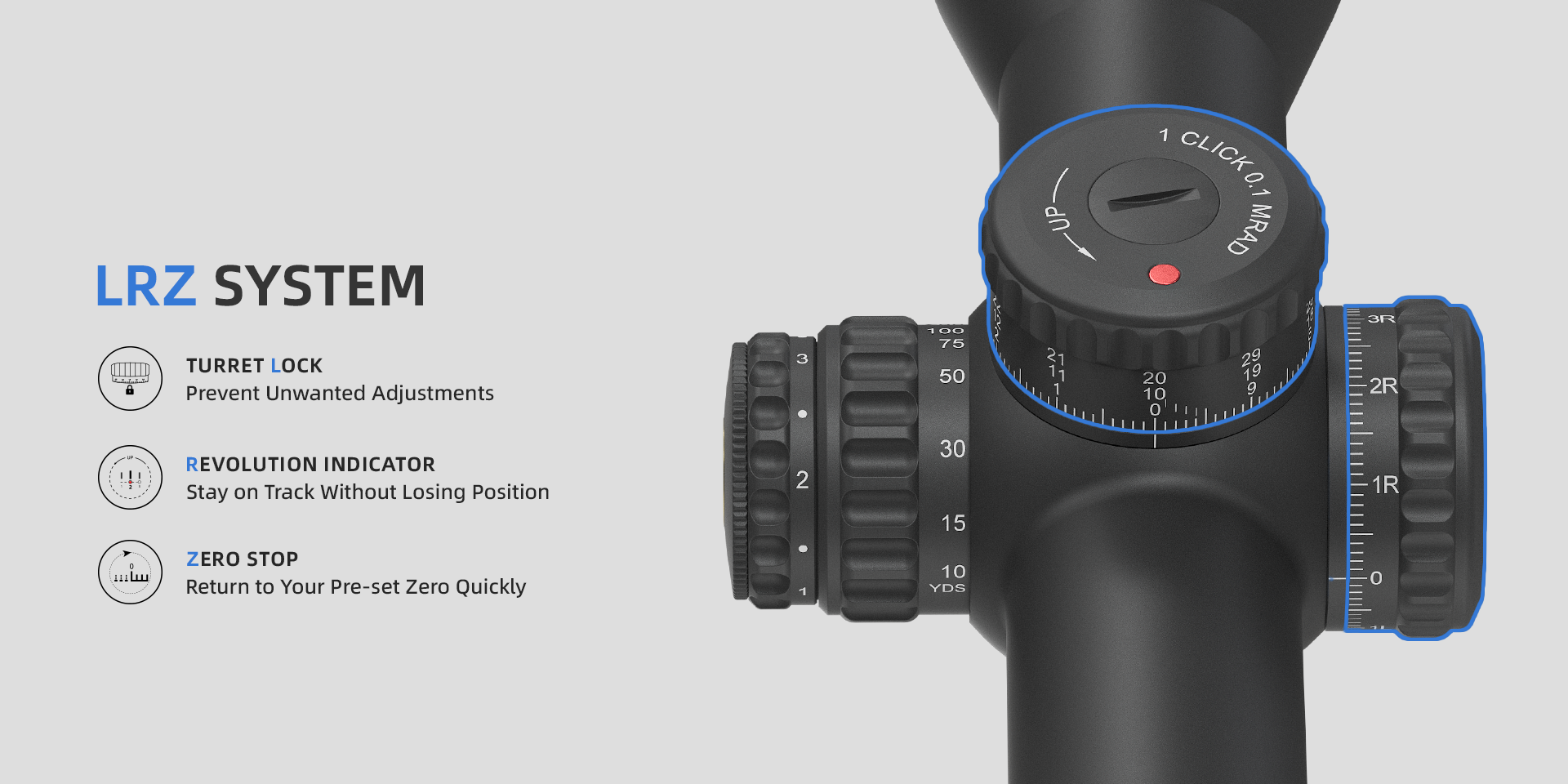
The LRZ Turret System combines three important functions.
2.1 Turret Lock: Keeping Your Settings Secure
Turret Lock helps prevent accidental adjustments during transportation, movement, or active shooting situations.
Once your settings are confirmed, the locking mechanism keeps the turret securely in place, reducing the risk of unwanted changes.
2.2 Revolution Indicator: Tracking Every Adjustment
When shooting at extended distances, elevation adjustments may require multiple turret rotations.
The Revolution Indicator helps shooters keep track of turret position, making it easier to know the current adjustment level and avoid losing track of settings during long-range dialing.
2.3 Zero Stop: Returning to Zero Faster
Zero Stop is one of the most useful features for shooters who frequently adjust their scope.
After dialing elevation for different distances, shooters can quickly return to their original zero by turning the turret back until it reaches the preset stop position.
This makes returning to zero faster and more reliable, especially when moving between close and long-range targets.
3. Exposed vs Capped Turrets: Which Design Fits Your Shooting Style?
Rifle scope turrets are generally divided into two main styles: exposed turrets and capped turrets.
Each design has its own advantages depending on how and where you use your optic.
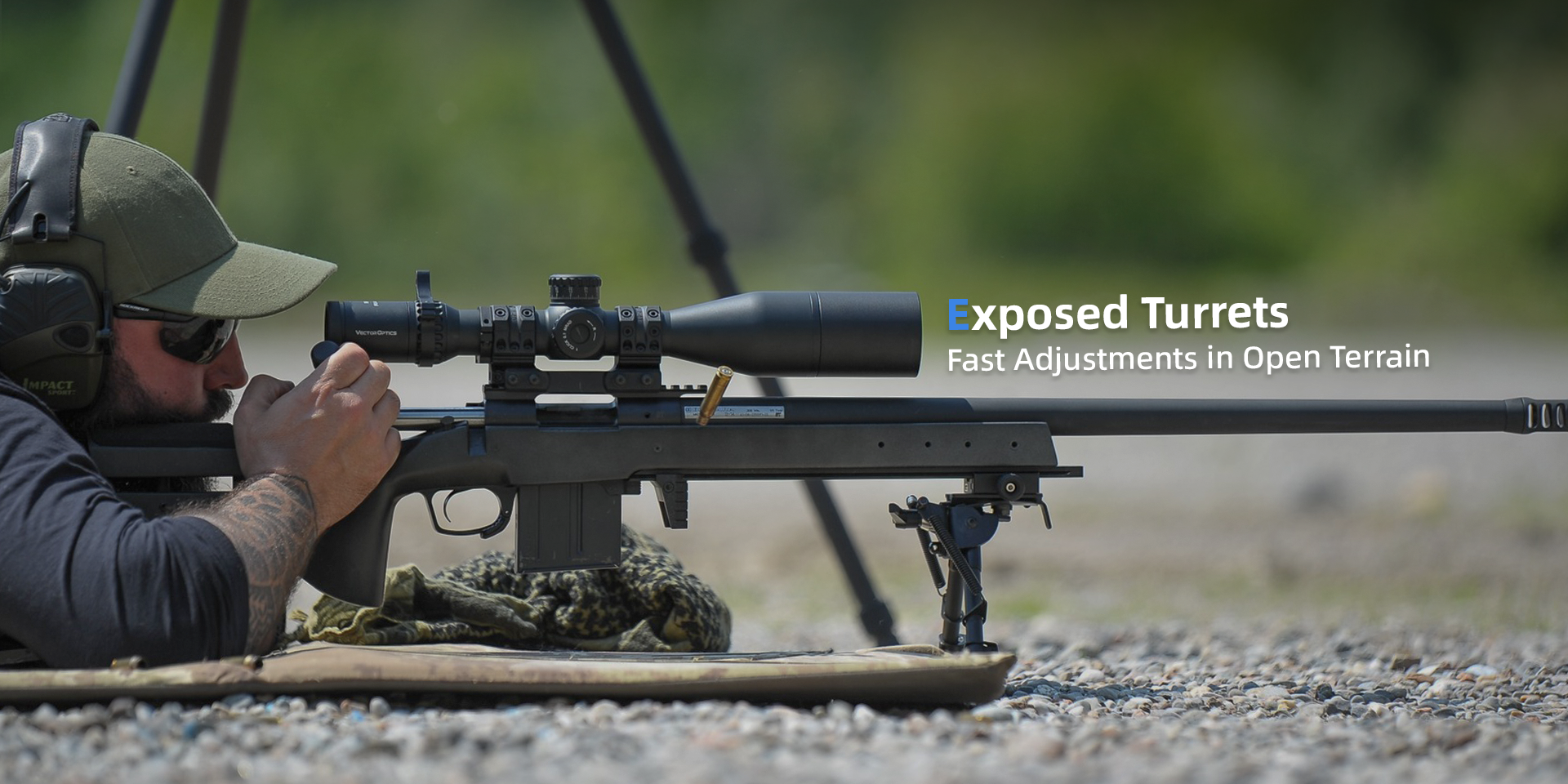
3.1 Exposed Turrets: Fast Access for Quick Adjustments
Exposed turrets provide direct access to adjustments without removing protective caps.
They are popular among shooters who frequently dial corrections during a shooting session.
Advantages:
- Quick and easy adjustment
- No tools required
- Ideal for long-range shooting and open environments
For competition shooting or precision applications where adjustments happen frequently, exposed turrets provide maximum convenience.
3.2 Capped Turrets: Protection for Hunting and Field Use
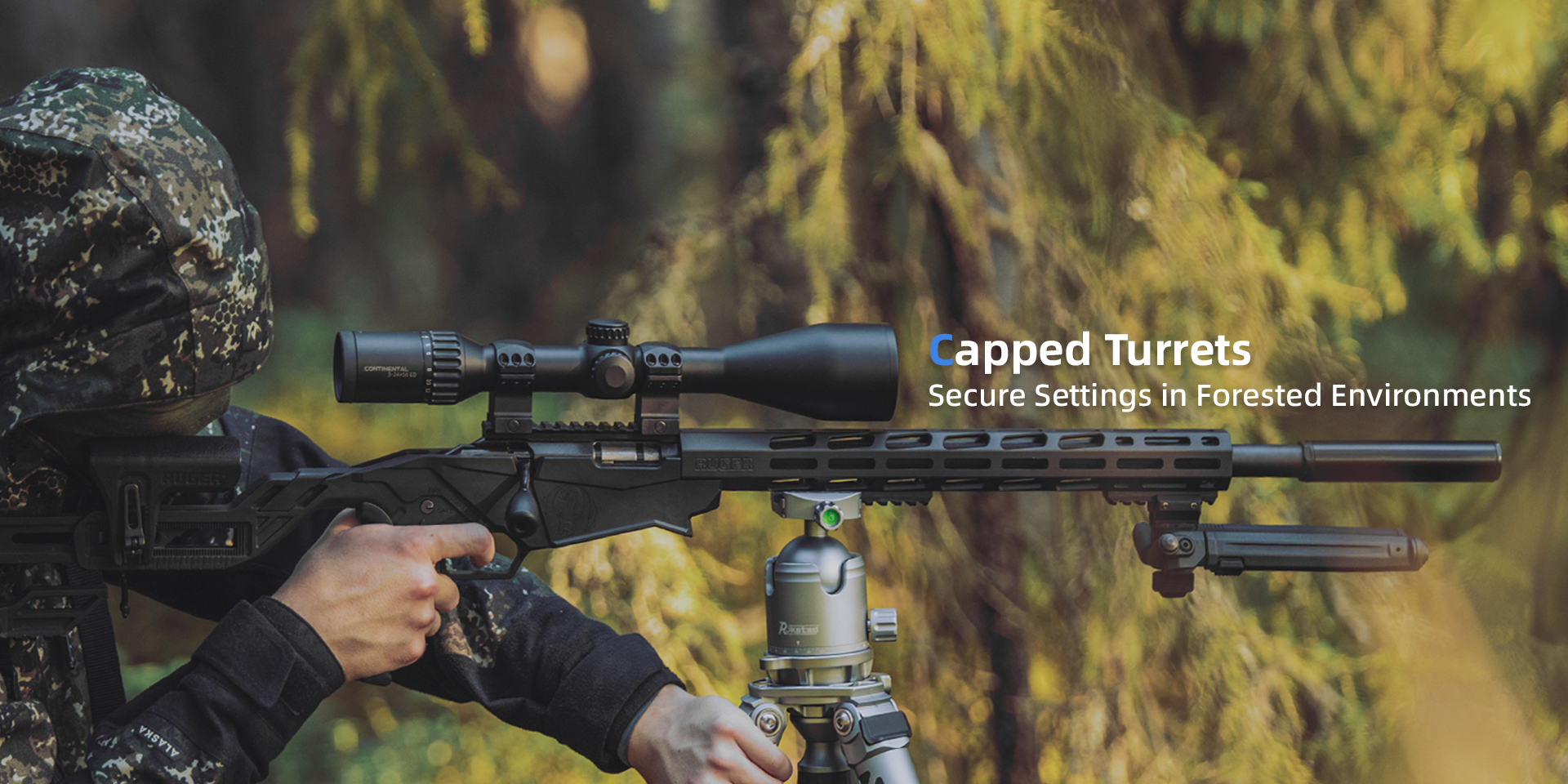
Capped turrets use protective covers to shield the adjustment knobs from accidental movement.
They are often preferred by hunters who move through challenging environments where branches, gear, or weather could affect exposed adjustments.
Advantages:
- Protects against accidental changes
- Better suited for rugged outdoor use
- Provides additional protection against dust and debris
For hunting in forests or unpredictable conditions, capped turrets offer extra confidence.
4. Why Does Turret Precision Matter for Shooting?
One of the key differences between basic and premium rifle scope turrets is adjustment precision.
Fine adjustments allow shooters to make smaller corrections, which becomes increasingly important as shooting distance increases.
Common adjustment systems include:
- 1/4 MOA clicks
- 1/10 MIL clicks
At longer ranges, even a single click can noticeably change the point of impact. Precise turret movement allows shooters to make corrections with confidence instead of relying on guesswork.
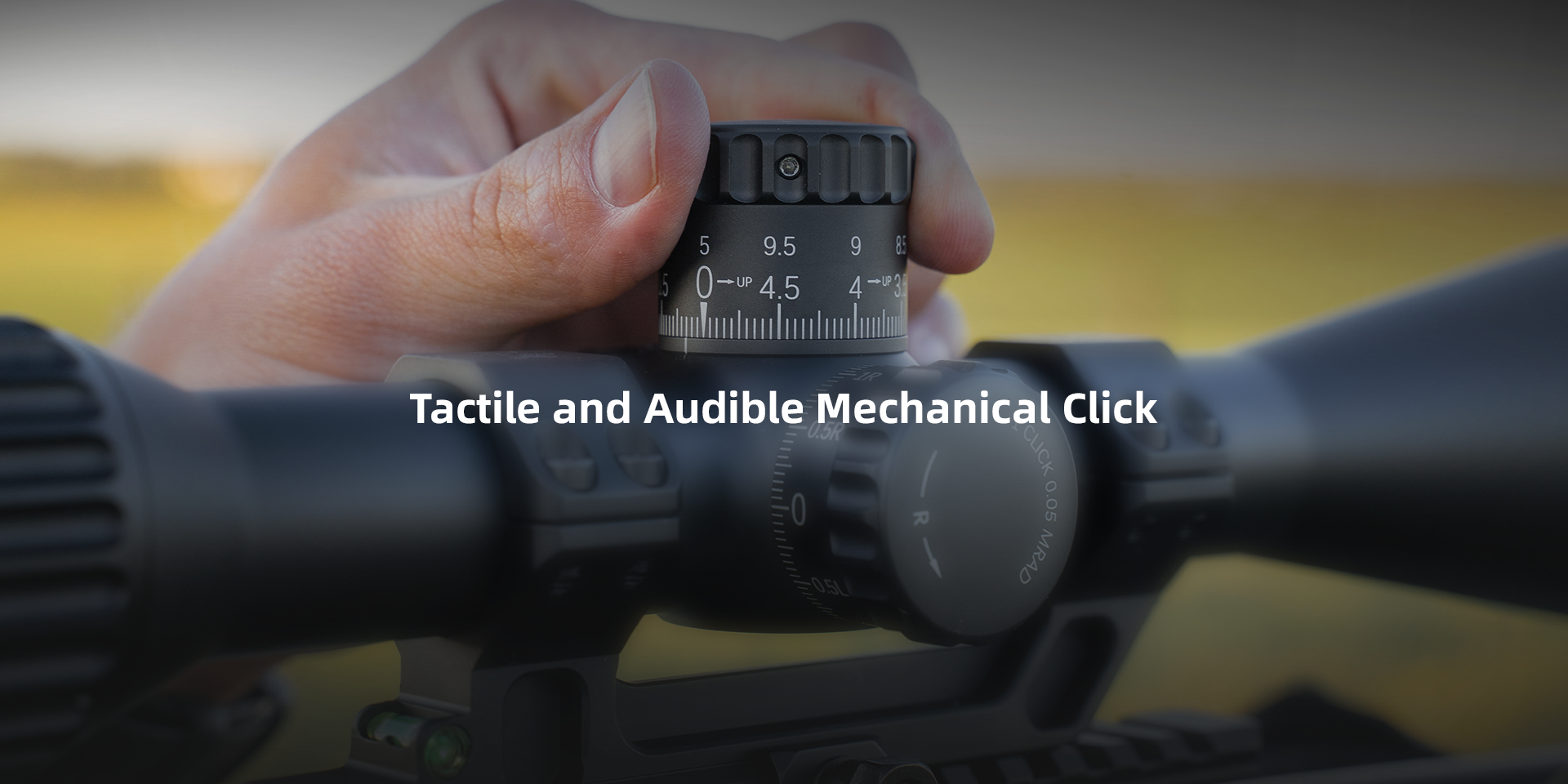
Good turrets should also provide clear tactile and audible feedback. A distinct click allows shooters to make adjustments without constantly looking away from the target, which is especially useful in low-light conditions or dynamic shooting environments.
A larger adjustment range is another important factor for long-range applications, providing enough elevation travel to compensate for significant bullet drop.
5. What Materials Are Used in High-Performance Turrets?
High-quality scope turrets need to withstand repeated adjustments, recoil, and harsh outdoor conditions.
Many premium turrets use aircraft-grade aluminum alloys, such as:
- 6061-T6 aluminum alloy
- 7075-T6 aluminum alloy
Compared with heavier materials, aluminum alloy provides a strong balance of durability and weight savings.
Key benefits include:
- Lightweight construction for easier handling
- Reliable performance in outdoor environments
- Smooth turret rotation over long-term use
- Clear mechanical feedback during adjustment
These qualities make aluminum alloy a common choice for modern precision rifle scopes.
6. Conclusion: Why Do Scope Turrets Matter?
Scope turrets are not just adjustment knobs — they are the connection between the shooter’s decisions and the bullet’s final path.
A reliable turret system gives shooters the ability to make precise corrections, return to zero quickly, and maintain confidence in changing conditions.
Whether you prefer exposed turrets for quick dialing or capped turrets for rugged hunting environments, choosing the right design helps ensure your rifle scope performs when it matters most.
FAQ
Q1. Why do small turret errors matter more at long range?
At longer distances, small adjustment errors become amplified. A minor difference in turret movement can create a much larger shift in point of impact downrange.
Q2. Can turret performance change over time?
Yes. Frequent adjustments, recoil, and internal wear may eventually affect tracking consistency. Regular maintenance and choosing a quality turret system can help maintain reliable performance.
Q3. Why don’t calculated adjustments always match real-world results?
Because actual shooting conditions are rarely perfect. Wind, temperature, ammunition differences, and muzzle velocity changes can all influence where the bullet lands.
Get a Free Quote Now!
Feel free to contact us anytime to get the best prices!