


Ever watched a shooting competition where competitors race against the clock, move between targets, and make split-second decisions? That’s USPSA shooting in action.
USPSA (United States Practical Shooting Association) combines speed, accuracy, movement, and strategy into an exciting competitive sport. Instead of standing still and shooting at one target, competitors tackle different courses of fire called stages.
New to USPSA? This guide covers everything from scoring and safety rules to divisions, classification levels, and what to expect at your first match.
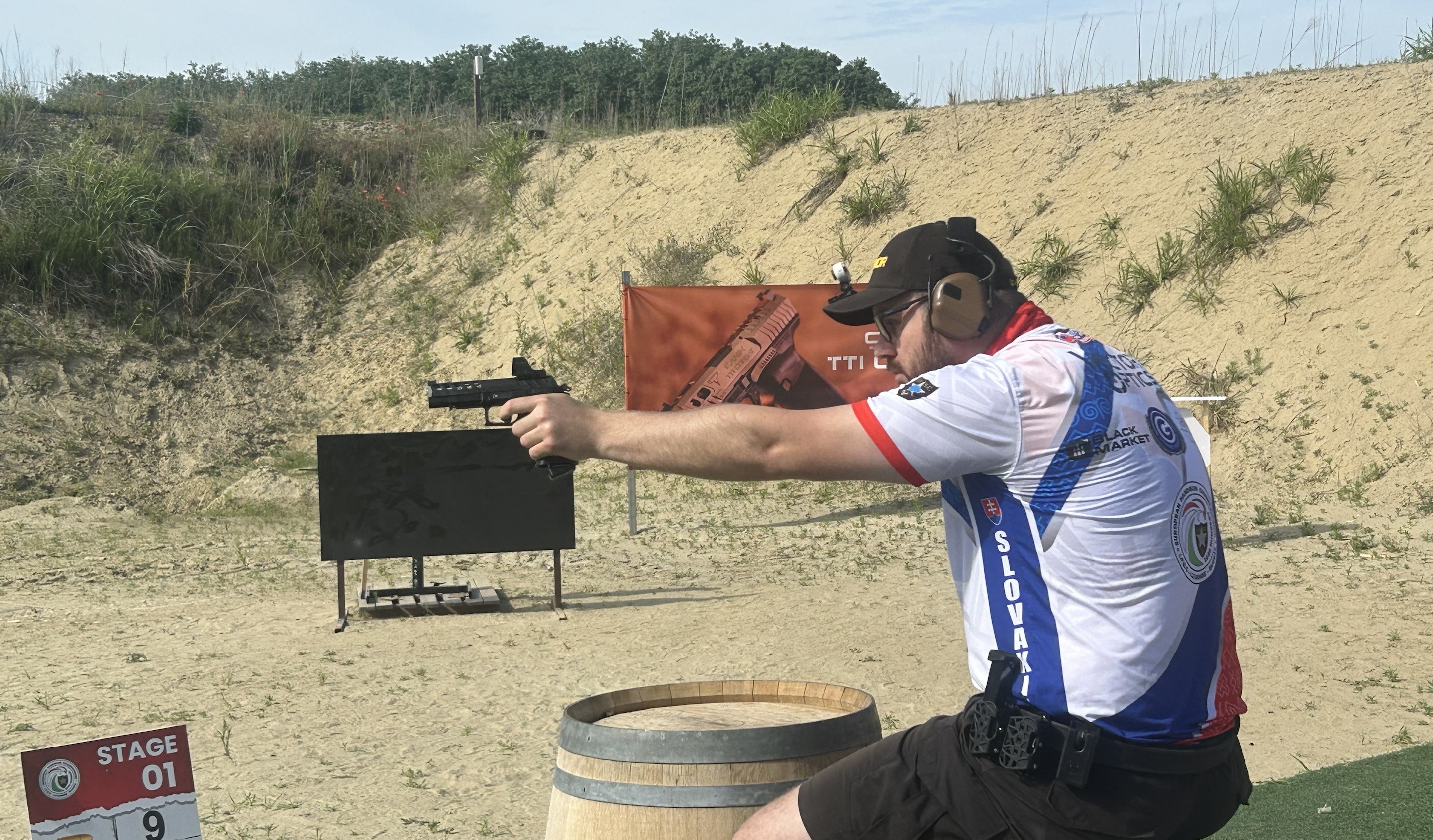
1. What Is USPSA Shooting and How Does It Work?
USPSA shooting is a timed competition where shooters engage paper and steel targets while following a specific course of fire.
Every stage presents a new challenge, testing several skills:
- Accuracy: Making hits in valuable scoring zones
- Speed: Completing stages efficiently
- Movement: Navigating the course safely
- Stage Planning: Deciding how to approach the targets
- Gun Handling: Managing reloads and equipment safely
The goal isn’t simply to shoot faster. It’s to earn the most points in the least time while following every safety rule.
1.1 What Types of Targets Are Used in USPSA?
USPSA competitions mainly use paper and steel targets.
Paper Targets
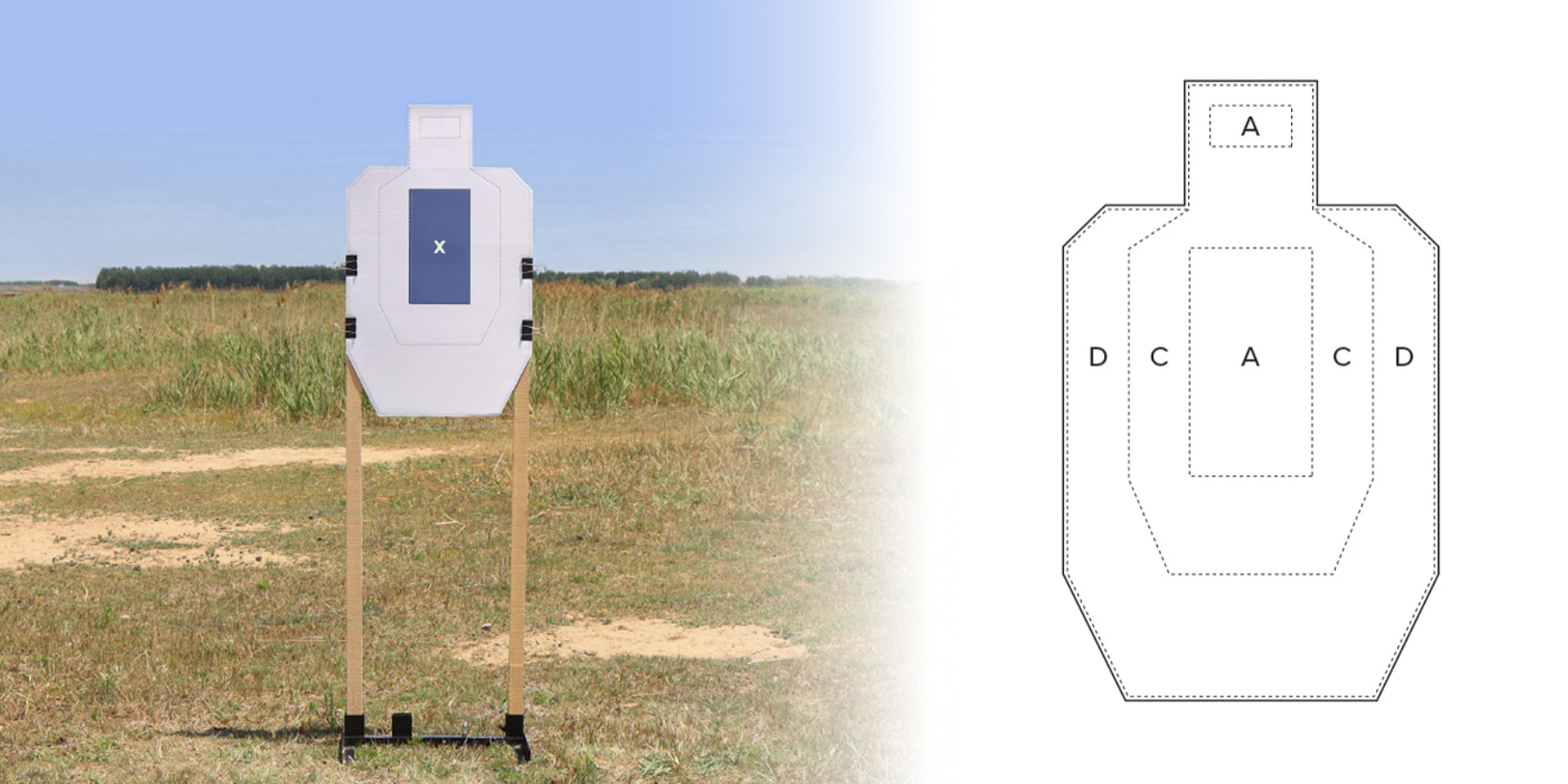
A standard USPSA cardboard target is approximately 18 × 30 inches, with three scoring zones:
- A-Zone: Highest-value hits
- C-Zone: Intermediate scoring area
- D-Zone: Lower-value hits
The A-zone rewards accuracy, while C- and D-zone hits can reduce your overall score.
Steel Targets
Common steel targets include round plates, full-size poppers, and mini-poppers. Scoring steel generally must fall to count as a hit, subject to the applicable rules.
Unlike paper targets, steel doesn’t have multiple scoring zones.
1.2 How Is USPSA Scoring Calculated?
USPSA uses a Hit Factor system, rewarding a combination of accuracy and speed.
Hit Factor = Points Earned ÷ Time (Seconds)
For example, scoring 100 points in 10 seconds gives you a Hit Factor of 10.0.
A faster run isn’t always better if too many points are lost. The challenge is finding the right balance.
1.3 What’s the Difference Between Minor and Major Power Factor?
USPSA uses Power Factor (PF) to classify ammunition for scoring.
Power Factor = Bullet Weight (grains) × Velocity (fps) ÷ 1,000
| Scoring Zone | Minor | Major |
|---|---|---|
| A | 5 | 5 |
| C | 3 | 4 |
| D | 1 | 2 |
Minor generally requires a minimum PF of 125, while Major commonly requires 165, depending on the division.
Major scoring gives higher values for C- and D-zone hits, but ammunition and equipment requirements vary between divisions.
2. Which USPSA Division Should Beginners Choose?
USPSA offers multiple divisions based on firearm configurations, optics, and permitted modifications.
Here are five common options:
| Division | Main Characteristics |
|---|---|
| Carry Optics | Slide-mounted red dot pistols, Minor scoring |
| Limited Optics | Competition-oriented pistols with slide-mounted optics |
| Limited | Modified pistols with iron sights |
| Open | Customized race guns with extensive equipment freedom |
| Production | Approved, mostly stock pistols with iron sights |
Other divisions include PCC, Single Stack, Revolver, and Limited 10.
For newcomers, Production and Carry Optics are worth exploring if you already own a compatible handgun. Limited Optics may appeal to shooters interested in more competition-focused equipment.
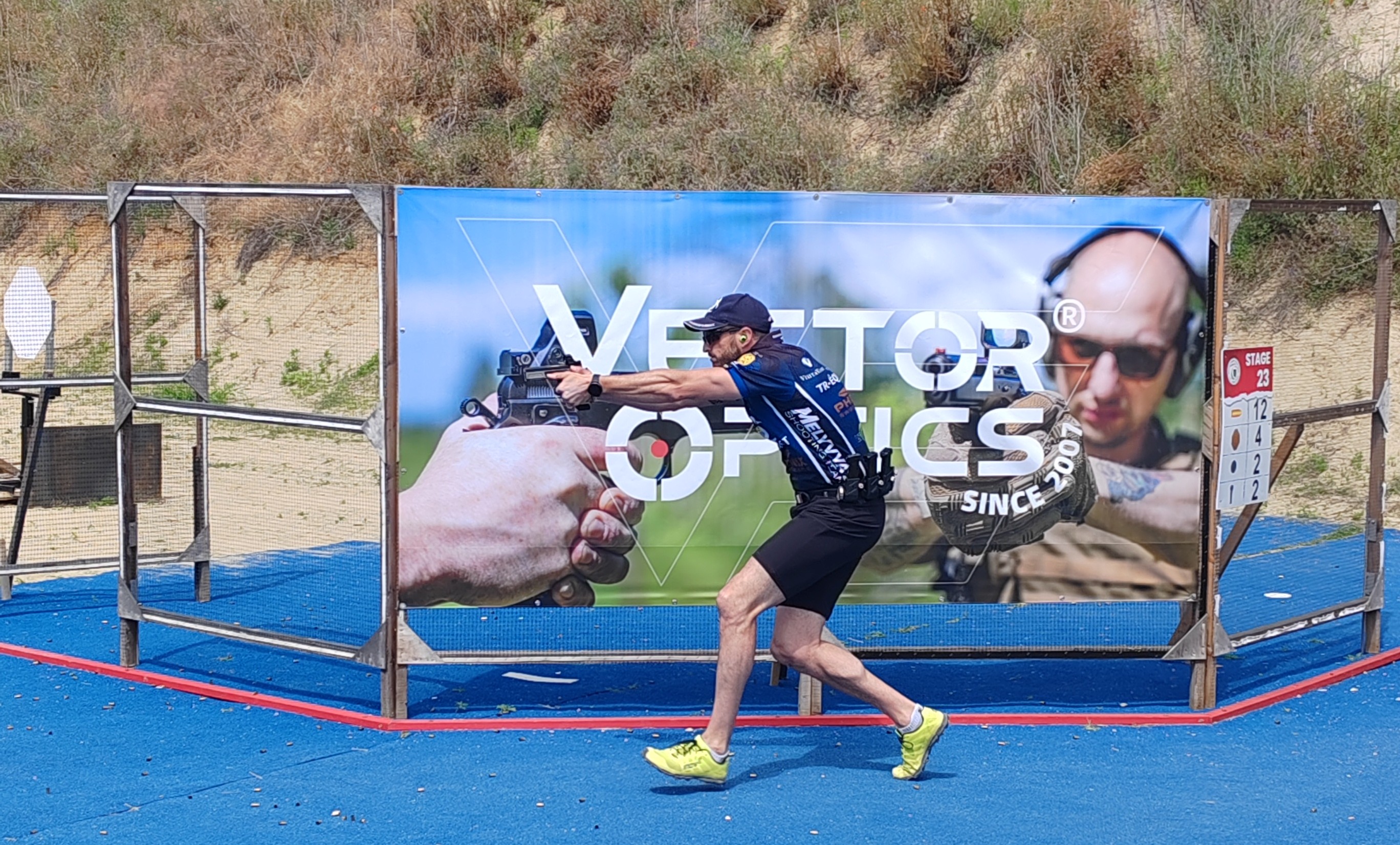
Optics can also influence your division choice. For example, the Vector Optics Frenzy FLEX Red Dot Series offers competition-oriented pistol optics with different reticle configurations.
Want a closer look at all nine divisions and their optic requirements? Read our USPSA Divisions & Red Dot Selection Guide.
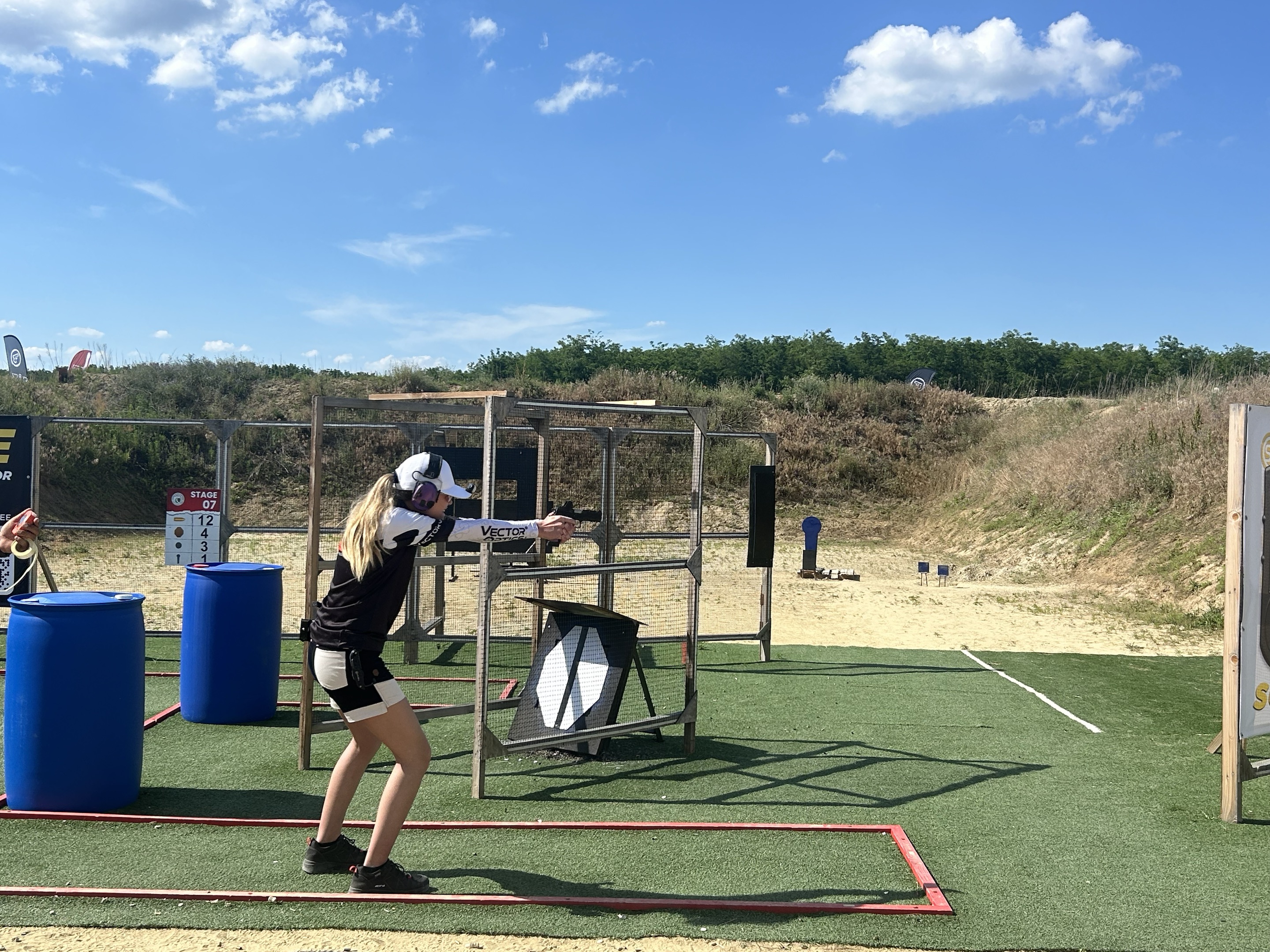
3. What Equipment Do You Need for Your First USPSA Match?
You don’t need a fully customized race gun to get started.
A basic USPSA competition gear checklist includes:
- A division-eligible firearm
- Secure holster covering the trigger guard, where required
- Competition belt and magazine pouches
- Eye and ear protection
- Sufficient ammunition and magazines
- Suitable red dot sight, if permitted and desired
Your holster, belt, and firearm configuration must meet the relevant division and match safety requirements.
For beginners exploring optics, the VictOptics Red Dot Sight Collection offers different designs for compatible recreational and range setups.
Always confirm equipment eligibility before entering a USPSA match.
4. What USPSA Safety Rules Can Lead to Disqualification?
Safety is non-negotiable in USPSA competitions. A serious violation can result in immediate disqualification (DQ).
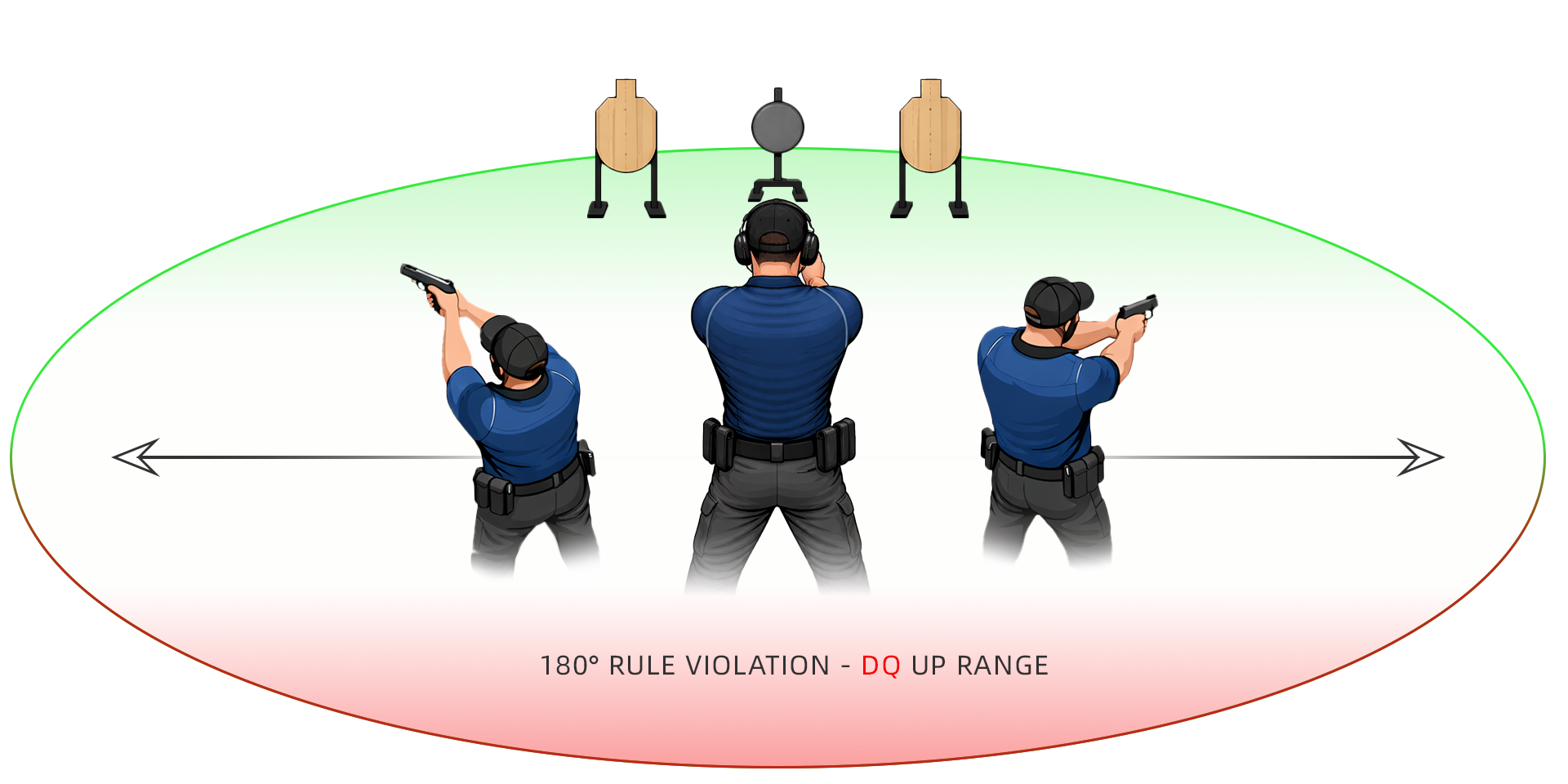
4.1 What Is the USPSA 180-Degree Rule?
The 180-degree rule establishes a muzzle-safe boundary during a stage. Breaking the designated safe angle can result in a DQ.
Always follow the stage briefing and Range Officer’s instructions.
4.2 When Must Your Finger Stay Outside the Trigger Guard?
Your trigger finger must remain outside the trigger guard during movement, reloading, and other situations specified by the rules.
Good trigger discipline is essential throughout the match.
4.3 What Other Safety Violations Should You Avoid?
Common disqualification situations include:
- Unsafe muzzle direction or sweeping a person
- Accidental or negligent discharge
- Dropping a loaded firearm
- Unsafe handling outside designated areas
Remember: Safety comes before speed, especially at your first match.
5. How Can You Improve Your USPSA Shooting Strategy?
Strong USPSA performance isn’t just about pulling the trigger quickly. It’s also about knowing when to speed up and when to prioritize precision.
Learn to Call Your Shots
Calling your shots means recognizing where your sights were when the shot broke and estimating the likely impact without immediately checking the target.
This skill helps competitors evaluate accuracy and make better decisions.
Understand Stage Planning
Before shooting, competitors are generally given an opportunity to review the course and plan their approach.
Experienced shooters consider target difficulty, reload requirements, and movement efficiency while staying within the stage rules.
Balance Speed and Accuracy
Easy targets and difficult targets don’t always demand the same pace.
Rather than chasing maximum speed on every shot, focus on consistency, accuracy, and safe execution.
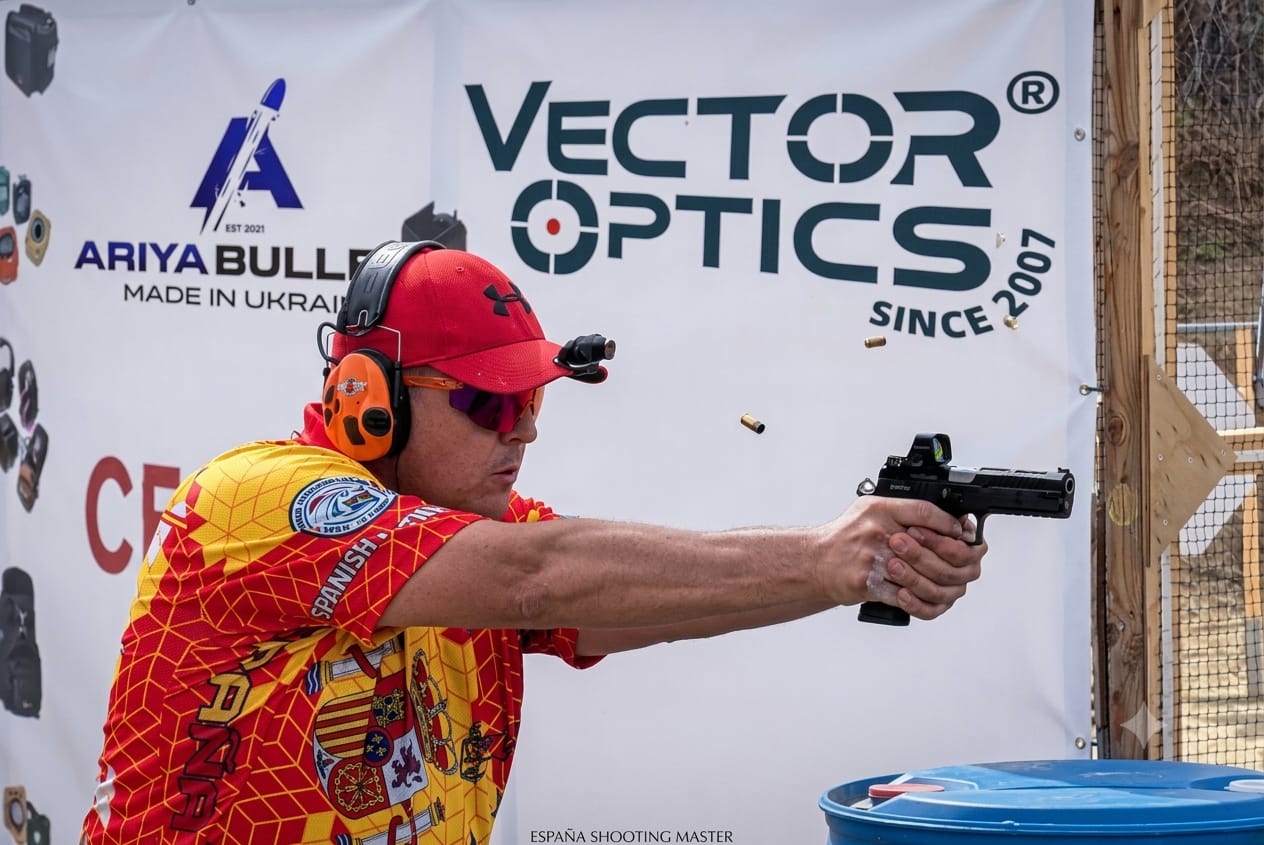
6. What Are USPSA Classifier Stages?
A USPSA classifier is a standardized course of fire used to evaluate competitive performance.
Unlike ordinary stages, classifier results are compared against established benchmarks, allowing shooters across different clubs to measure their progress.
Each classifier produces a Hit Factor, which is compared with its High Hit Factor (HHF) benchmark.
Classifier stages help competitors understand their current performance level and track improvement over time.
7. How Does the USPSA Classification System Work?
USPSA uses a classification system to group shooters by demonstrated skill.
| Class | Skill Level |
|---|---|
| D | Developing |
| C | Intermediate |
| B | Competent |
| A | Advanced |
| M | Master |
| GM | Grand Master |
Your classification is based on eligible classifier results compared with established HHF benchmarks.
Under the classification method described in the original guide, the system uses the best six of the most recent eight eligible scores, with a minimum number required for initial classification. Check the current USPSA classification policy for the latest calculation requirements.
The idea is simple: Your classification reflects your demonstrated performance, giving you a benchmark for improvement.
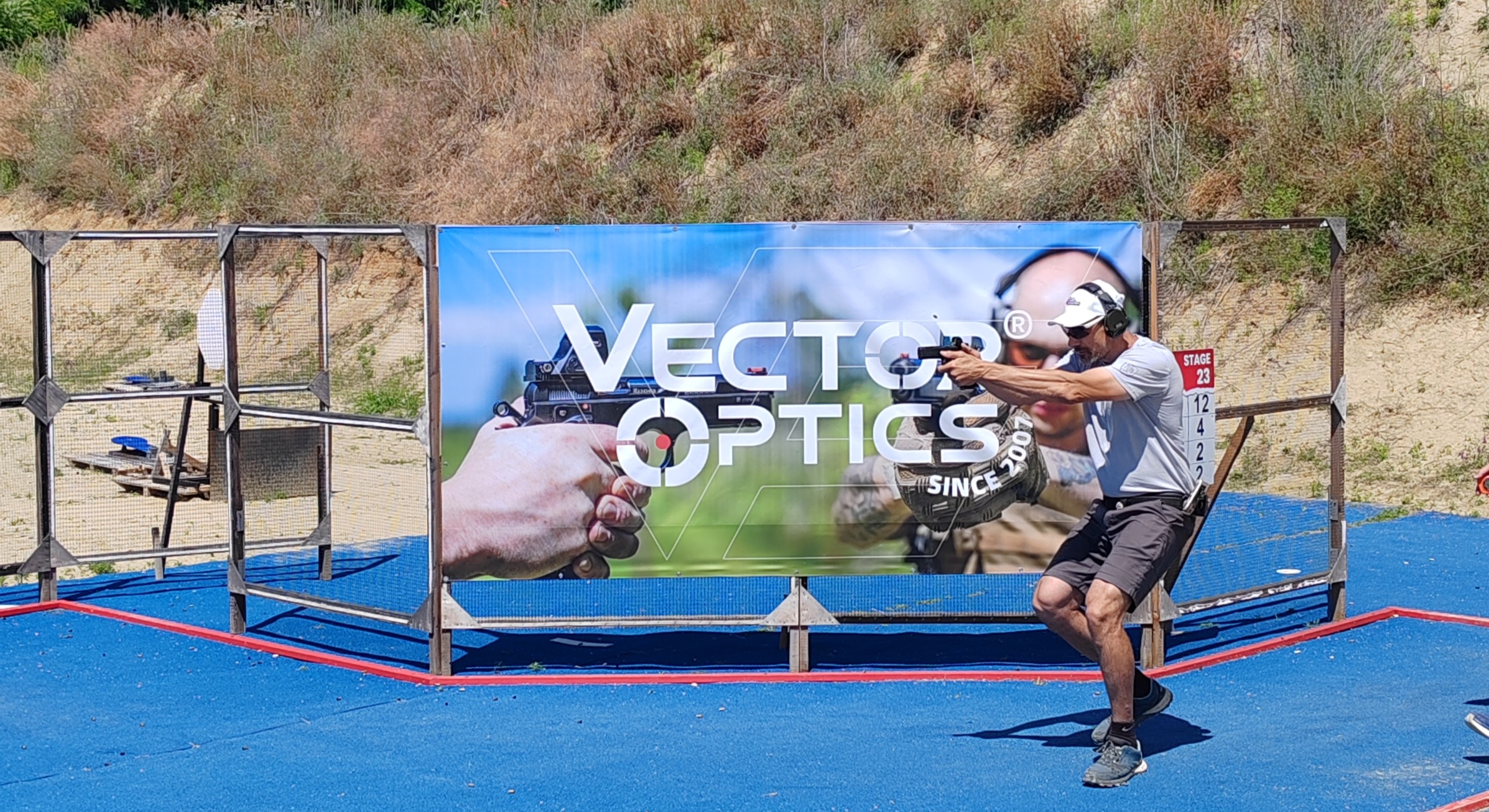
8. What Happens at a Typical USPSA Match?
USPSA competitions range from local club events to major national championships.
- Level I: Local club matches
- Level II–III: Larger sectional, state, or regional competitions
- National Championships: Major national-level events
A typical local match might feature 4–8 stages and require roughly 100–200 rounds, although actual requirements vary.
First-time competitors should contact the match organizer, review the match instructions, and arrive early enough for registration and any required safety briefing.
Local matches are a great place to learn the competition format and meet other shooters.
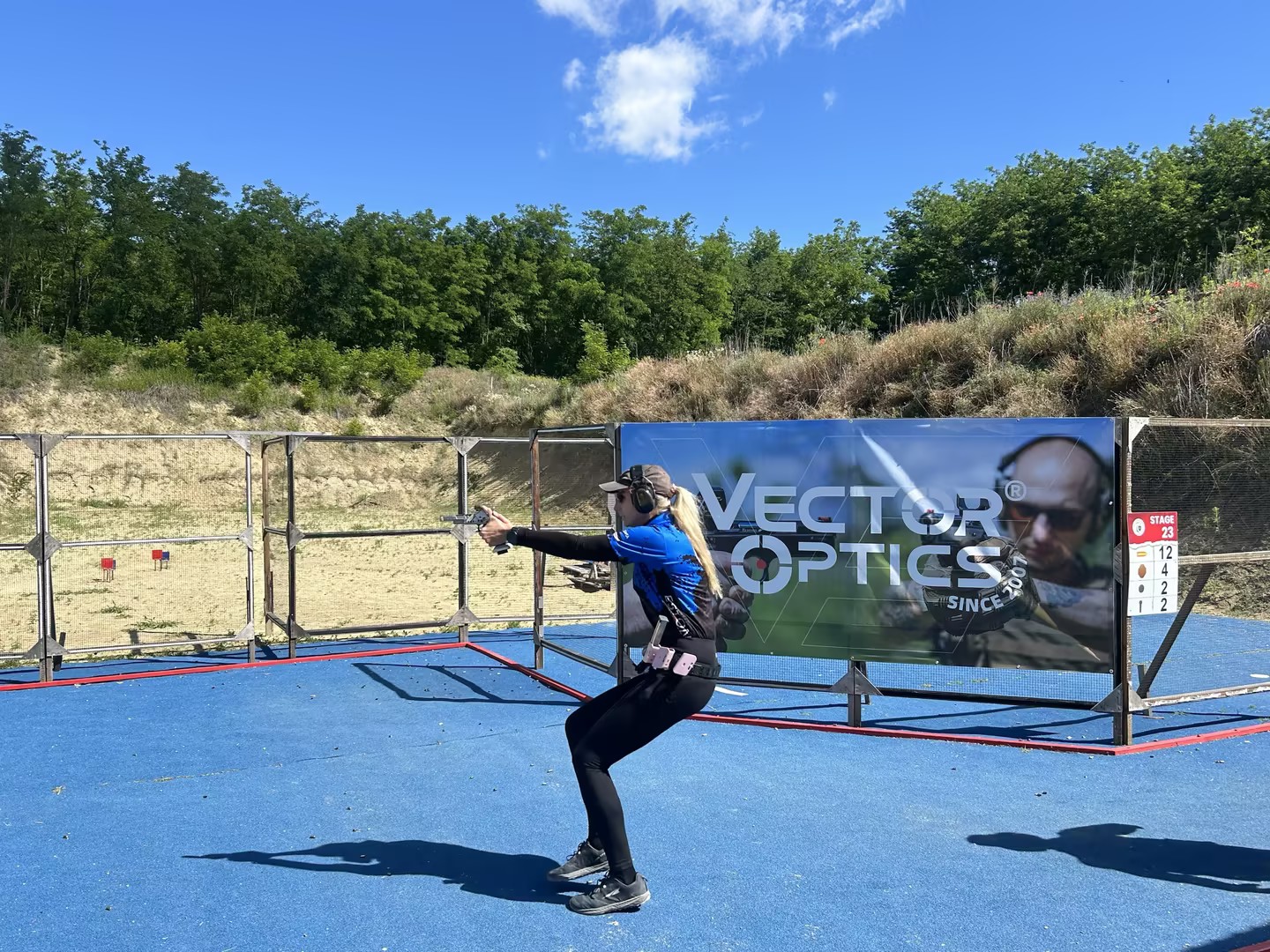
9. Why Do Shooters Enjoy USPSA Competition?
USPSA combines athletic movement, precision, decision-making, and equipment knowledge into one competitive experience.
Every stage feels different, and there’s always something new to learn.
As competitors gain experience, some explore equipment upgrades, including improved triggers, magazine accessories, and red dot sights. But expensive gear isn’t what makes a great shooter.
Start with the fundamentals, prioritize safety, and enjoy the process of improving.
FAQ: What Else Should New USPSA Shooters Know?
1. What’s the Difference Between USPSA, IPSC, and IDPA?
USPSA and IPSC share a practical shooting foundation, with an emphasis on speed, accuracy, and stage planning. IDPA places greater emphasis on defensive-style scenarios and more restrictive equipment rules.
2. Do You Need a USPSA Membership to Shoot a Local Match?
Not always. Some local clubs allow nonmembers to participate. Membership requirements may differ for classifier recognition and larger events, so check with the organizer.
3. How Long Does a USPSA Match Usually Last?
Local matches often take several hours, depending on the number of stages, participants, and squads. Larger events may run over multiple days.
4. Can You Practice USPSA Skills Without Live Ammunition?
Some fundamentals, such as sight alignment and safe handling, can be practiced through dry-fire exercises. Follow established firearm safety procedures and use a suitable training environment.
5. Where Can You Find USPSA Rules and Upcoming Matches?
The official USPSA website provides rulebooks, club information, match listings, and classification resources.
